






What's Happening?
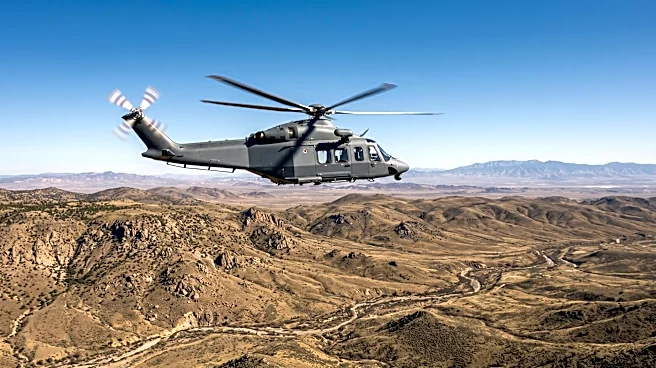
The U.S. Air Force has placed its first full-rate production order for four MH-139A Grey Wolf helicopters from Boeing, valued at approximately $85 million, which includes some sustainment work. This order follows the Air Force's declaration of initial
operational capability (IOC) for the Grey Wolf just weeks prior, on August 10th. The MH-139A is slated to replace the aging UH-1N Huey helicopters for intercontinental ballistic missile security missions at Malmstrom Air Force Base, Wyoming; F.E. Warren Air Force Base, Wyoming; and Minot Air Force Base, North Dakota. The delivery of these four helicopters is anticipated in 2028 or 2029, bringing the total number of Grey Wolves under contract to 42, with 27 already delivered from previous production lots and test aircraft.
Why It's Important?
This full-rate production order marks a significant milestone for the MH-139A Grey Wolf program, signaling the Air Force's commitment to modernizing its nuclear missile security capabilities. The Grey Wolf offers substantial improvements over the UH-1N Huey, being nearly 50% faster, capable of carrying twice as many troops, and featuring enhanced defensive systems. This upgrade is crucial for securing vital national assets across the country's strategic missile fields, directly impacting national security and defense readiness. The program has faced delays and cost adjustments, including a reduction in the planned number of helicopters due to spending caps, but this order indicates a renewed push to field the aircraft. The successful transition from the Huey to the Grey Wolf will enhance the Air Force Global Strike Command's ability to protect critical infrastructure and personnel.
What's Next?
Boeing is expected to deliver the four MH-139A Grey Wolf helicopters in 2028 or 2029. The Air Force Global Strike Command will continue integrating the Grey Wolf into its operations, replacing the UH-1N Huey at the designated missile bases. Future orders will depend on congressional appropriations and the evolving needs of the Air Force. While the program initially planned for more helicopters, the current focus is on fulfilling the revised requirement of at least 56 units to keep unit costs below critical thresholds. The Air Force will also continue to evaluate the performance and effectiveness of the Grey Wolf in real-world missions, building on the initial operational mission conducted in January at Malmstrom Air Force Base. The HH-60W combat rescue helicopters will take over the VIP mission, which was previously considered for the Grey Wolf.
Beyond the Headlines
The Grey Wolf program's journey, marked by initial delays and budget adjustments, reflects the complex challenges inherent in large-scale defense procurement. The decision to proceed with full-rate production, despite past hurdles, underscores the strategic importance of modernizing critical defense assets. This move also highlights the ongoing tension between defense spending priorities and fiscal constraints, as evidenced by the program's initial reduction in scope and subsequent adjustment to meet Nunn-McCurdy law requirements. Furthermore, the replacement of the UH-1N Huey, a long-serving helicopter, signifies a generational shift in military aviation technology and capabilities. The Grey Wolf's enhanced speed, capacity, and defensive systems are indicative of the evolving threats and operational demands faced by the U.S. Air Force in protecting its strategic nuclear deterrent.