








What's Happening?
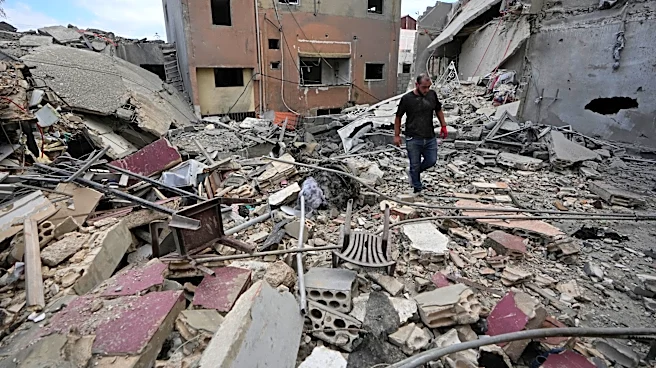
Despite a ceasefire agreement in April, Hezbollah has continued to launch drone attacks against Israel, prompting renewed military action. The drones, which utilize fiber optic technology to evade jamming, have proven difficult for Israel to counter effectively.
This ongoing threat has led to increased military operations along the Lebanese border, as Israel seeks to neutralize Hezbollah's capabilities. The situation is further complicated by Israel's reluctance to adopt strategies from other conflicts, such as those in Ukraine, due to political tensions.
Why It's Important?
The persistent drone threat from Hezbollah represents a significant security challenge for Israel, highlighting the evolving nature of warfare and the need for adaptive defense strategies. This situation underscores the limitations of traditional military responses to modern technological threats. The ongoing conflict has broader implications for regional stability and could influence international diplomatic efforts to mediate peace. The continued hostilities also pose risks to civilian populations on both sides of the border, potentially leading to humanitarian crises.
What's Next?
Israel is likely to continue its military operations in Lebanon, seeking to dismantle Hezbollah's drone capabilities. However, the effectiveness of these efforts remains uncertain, given the technological sophistication of the drones. The situation may prompt Israel to reconsider its defense strategies and explore new technologies or alliances to counter the threat. Additionally, there may be increased international pressure for a diplomatic resolution to prevent further escalation and address the humanitarian impact of the conflict.