









What's Happening?
The recently signed Comprehensive Economic and Trade Agreement between India and the United Kingdom marks a significant milestone in bilateral trade relations. Effective July 15, the agreement allows nearly all of India's exports to enter the UK duty-free,
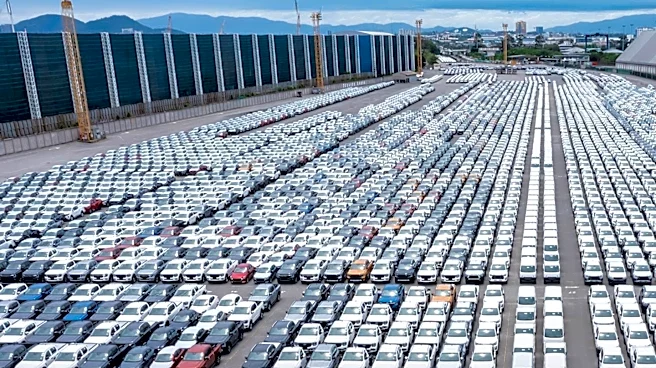
benefiting labor-intensive sectors such as textiles, garments, and pharmaceuticals. This development is expected to boost employment and enhance India's export competitiveness. Additionally, the agreement addresses long-standing issues such as double social security contributions for Indian professionals in the UK. On the import side, India has agreed to gradually reduce duties on British cars and Scotch whisky, a move aimed at fostering competition and improving domestic industry standards.
Why It's Important?
The India-UK trade agreement is pivotal for India's economic strategy, as it opens up new opportunities for Indian exporters and addresses trade imbalances. By eliminating tariffs on key exports, the agreement is expected to create jobs and stimulate economic growth in India. The reduction of import duties on British goods is also significant, as it encourages domestic industries to enhance their competitiveness. This agreement reflects India's commitment to engaging in global trade and leveraging international partnerships to drive economic development. It also highlights the importance of strategic trade agreements in shaping a country's economic landscape.
Beyond the Headlines
The agreement's impact extends beyond immediate economic gains, as it challenges Indian industries to compete on a global scale. By exposing domestic industries to international competition, the agreement encourages innovation and efficiency, which are crucial for long-term economic growth. Additionally, the resolution of social security issues for Indian professionals in the UK strengthens bilateral relations and addresses a key concern for Indian expatriates. This agreement serves as a reminder of the importance of strategic trade policies in fostering economic resilience and competitiveness.