







What's Happening?
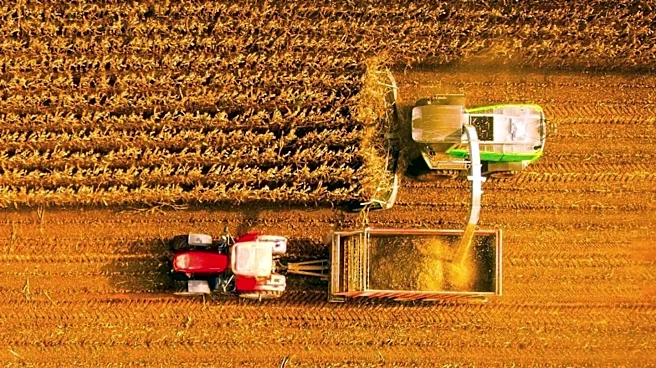
Rainfall is anticipated to impede harvest progress across various parts of the United States in the coming days, particularly as the country approaches November. USDA meteorologist Brad Rippey indicated that farmers will need to capitalize on opportunities
to complete fieldwork between showers before a wetter weather pattern establishes itself in early November. Despite the impending wet conditions, significant progress has been made in the current harvest season. The latest USDA reports show that approximately four-fifths of U.S. soybeans have been cut, and 60% of the corn harvest is complete. Rippey expects further substantial gains in harvest completion this week during dry intervals, but predicts a slowdown in fieldwork pace once the wet system, originating from the Northwest and tapping into tropical moisture, fully arrives.
Why It's Important?
The expected slowdown in harvest progress due to rain carries significant implications for U.S. agriculture and the broader economy. Timely harvesting is crucial for maximizing crop yields and quality, and delays can lead to increased spoilage, reduced market value, and higher operational costs for farmers. For corn and soybean producers, who have already made considerable progress, any prolonged interruption could jeopardize the remaining unharvested crops, especially if adverse weather conditions persist or worsen. This situation could impact commodity prices, potentially affecting both domestic food supply chains and international trade, as the U.S. is a major exporter of these crops. Furthermore, the need for farmers to work quickly between rain events adds pressure and can increase the risk of equipment breakdowns or accidents, highlighting the inherent challenges and vulnerabilities within the agricultural sector.
What's Next?
Farmers across the affected regions will be closely monitoring weather forecasts and working to complete as much fieldwork as possible during dry windows before the wetter system fully sets in. The USDA will continue to release updated harvest progress reports, which will provide a clearer picture of the impact of the rain on overall agricultural output. The pace of fieldwork is expected to decrease significantly as November begins, potentially extending the harvest season for some crops. This could lead to increased drying costs for grains if they are harvested with higher moisture content. Stakeholders in the agricultural industry, including commodity traders and food processors, will be adjusting their logistics and planning based on the evolving harvest situation and potential impacts on supply.
Beyond the Headlines
Beyond the immediate concerns of harvest delays and economic impacts, this weather event underscores the increasing volatility and unpredictability of agricultural seasons, a trend often linked to broader climate patterns. Farmers are continually adapting to more extreme and erratic weather, which necessitates greater resilience in farming practices, investment in weather-resistant infrastructure, and advanced meteorological forecasting. The reliance on narrow windows of favorable weather for critical operations like harvesting highlights the delicate balance between agricultural productivity and environmental conditions. This situation also brings into focus the importance of robust crop insurance programs and government support mechanisms that can help farmers mitigate financial losses stemming from weather-related disruptions, ensuring the long-term sustainability of the U.S. food supply.