







What's Happening?
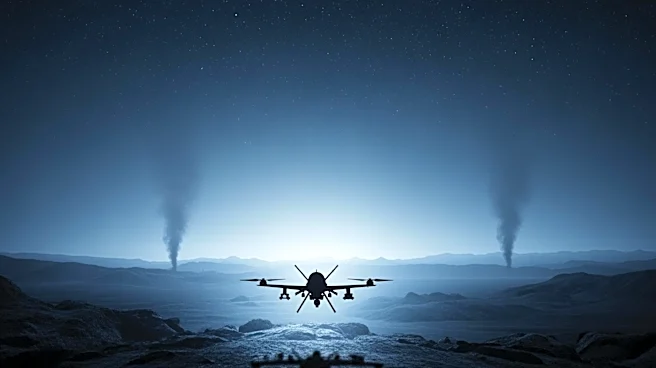
The U.S. military executed self-defense strikes against Iranian targets after Iranian forces attacked U.S. Navy destroyers in the Strait of Hormuz. According to U.S. Central Command, the Iranian assault involved missiles, drones, and small boats. In response,
U.S. forces targeted Iranian military facilities, including missile and drone launch sites. Despite the exchange, President Trump asserted that the ceasefire remains intact and expressed optimism about ongoing negotiations for a peace deal. Iran accused the U.S. of violating the ceasefire and targeting an Iranian tanker. The situation underscores the fragile nature of the ceasefire and the complexities of U.S.-Iran relations.
Why It's Important?
The incident highlights the strategic importance of the Strait of Hormuz, a critical chokepoint for global oil supplies. Any disruption in this region can lead to significant economic repercussions, including rising oil prices, which have already impacted U.S. consumers with higher gasoline costs. The conflict also poses a challenge to U.S. foreign policy, as it navigates the delicate balance between military action and diplomatic negotiations. The outcome of these events could influence global energy markets and geopolitical dynamics, particularly in the Middle East.
What's Next?
Negotiations between the U.S. and Iran continue, with potential for a peace agreement that could ease tensions and stabilize the region. However, unresolved issues such as Iran's nuclear program and sanctions relief remain significant hurdles. The U.S. military's readiness to defend its assets suggests that further confrontations could occur if diplomatic efforts falter. The international community will be closely monitoring these developments, as they have far-reaching implications for regional security and global economic stability.