

What's Happening?
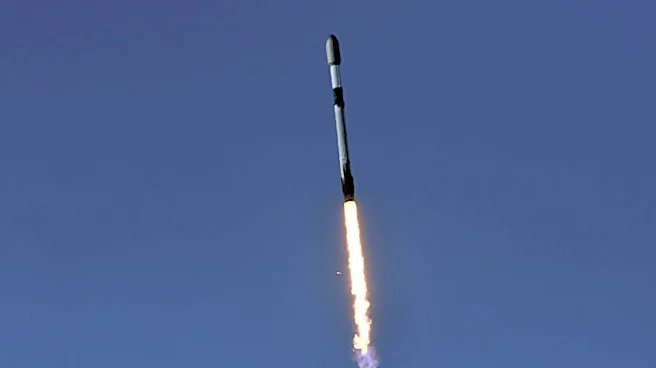
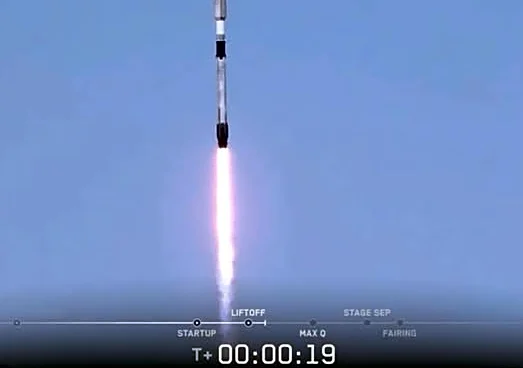
NASA's Sun Radio Interferometer Space Experiment (SunRISE) mission is now targeting a launch no earlier than mid-2027. This heliophysics mission will be launched aboard a SpaceX Falcon Heavy rocket from NASA's Kennedy Space Center in Florida, serving
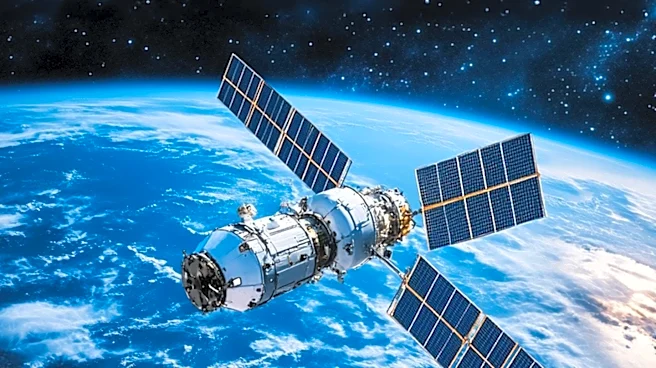
as a rideshare payload sponsored by the United States Space Force’s Space Systems Command. The SunRISE mission consists of six small satellites, each about the size of a toaster oven, designed to operate in formation as a single, large radio telescope. These SmallSats will be positioned slightly above geosynchronous orbit, approximately 22,000 miles (35,000 kilometers) in altitude. Their primary objective is to track radio bursts originating from the Sun's atmosphere, or corona, which are generated by accelerated particles leaving the Sun. The assembly and testing of these SmallSats have been completed at Utah State University’s Space Dynamics Laboratory in Logan, where they will be stored until their shipment to Florida prior to launch.
Why It's Important?
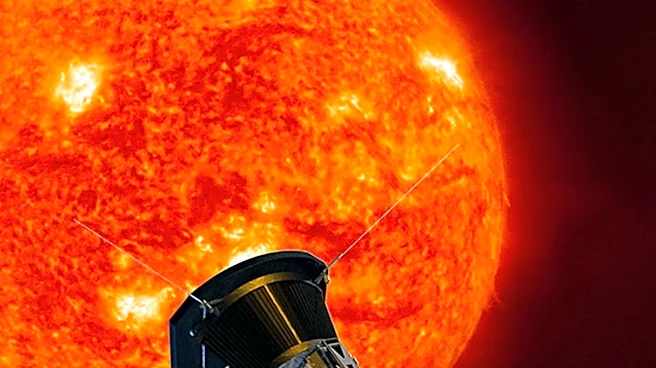
The SunRISE mission is critical for improving space weather prediction and mitigation efforts. Solar energetic particles, which are preceded by the radio waves that SunRISE will track, can pose significant hazards to satellites and astronauts. In extreme cases, these solar particle events can damage vital space infrastructure and endanger human spaceflight missions. By tracking these radio bursts, SunRISE aims to provide earlier warnings of impending solar storms, allowing for better protective measures to be implemented. This capability is increasingly important as humanity expands its presence in space, with more satellites in orbit and plans for extended human missions to the Moon and Mars. The data collected by SunRISE will enhance our understanding of solar physics and the mechanisms behind solar particle acceleration, contributing to the safety and sustainability of space operations.
What's Next?
Following the completion of assembly and testing, the six SunRISE SmallSats will remain in storage at Utah State University’s Space Dynamics Laboratory until they are transported to Florida for launch preparations. The mission team will continue to prepare for the mid-2027 launch window, coordinating with SpaceX and the United States Space Force. Once in orbit, the SmallSats will begin their operational phase, working in concert to form a virtual radio telescope. The University of Michigan in Ann Arbor will manage the science operations center, while NASA's Jet Propulsion Laboratory (JPL) will oversee the mission operations center. The data gathered will be analyzed by scientists to develop more accurate models for predicting solar energetic particle events, ultimately contributing to enhanced space weather forecasting capabilities.
Beyond the Headlines
The SunRISE mission represents a significant step forward in the field of heliophysics and space weather research. The use of a distributed network of SmallSats acting as a single instrument is an innovative approach to space-based observation, potentially paving the way for future missions that utilize similar swarm technologies for more complex scientific investigations. Beyond its immediate practical applications for space weather, SunRISE will deepen our fundamental understanding of the Sun's dynamic processes and its interaction with the solar system. This knowledge is not only vital for protecting our technological assets in space but also for comprehending the broader astrophysical phenomena that govern stars and planetary environments across the universe. The collaboration between NASA, the U.S. Space Force, and academic institutions also highlights the interdisciplinary nature of modern space exploration.