
What's Happening?
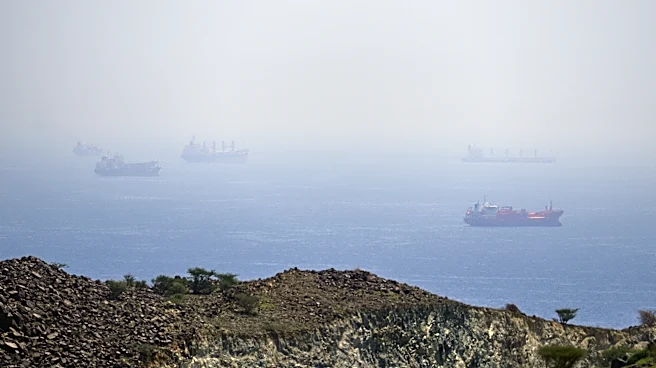
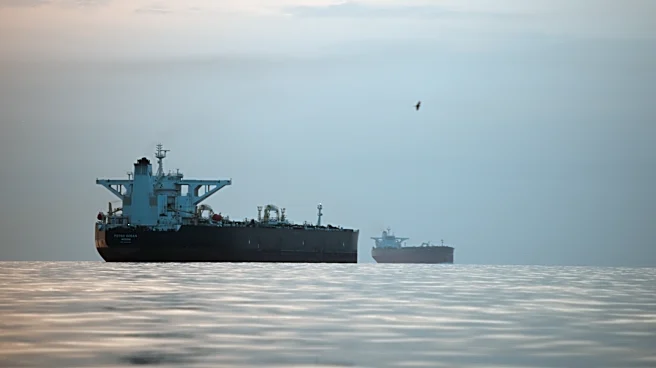
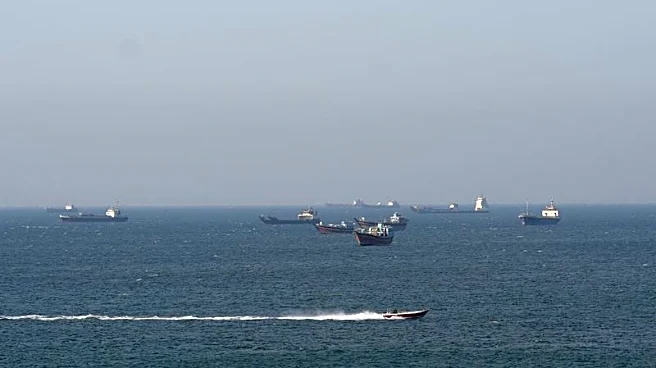
Tensions between the United States and Iran have escalated following attacks on commercial ships in the Strait of Hormuz. The U.S. Navy fired on an Iranian container ship attempting to bypass a naval blockade,
leading to its seizure by U.S. Marines. This action followed Iran's attack on a tanker in the Strait, where Revolutionary Guard gunboats fired on the vessel. President Trump has threatened further military action against Iran if a deal is not reached. The ceasefire agreement between the two nations is set to expire soon, and while talks were planned in Islamabad, Iran has refused to attend due to grievances including the naval blockade.
Why It's Important?
The conflict has significant implications for global oil markets, as the Strait of Hormuz is a critical chokepoint for oil transportation. The recent attacks have caused crude oil prices to surge, with West Texas Intermediate futures rising by 7% and Brent crude similarly increasing. This volatility affects global energy markets and could lead to increased costs for consumers and businesses. Additionally, the geopolitical instability may impact international relations and trade, particularly in the Middle East, where tensions could disrupt shipping routes and economic activities.
What's Next?
The expiration of the ceasefire agreement poses a risk of further military engagements between the U.S. and Iran. The potential for renewed conflict could lead to more disruptions in oil supply and further price increases. Diplomatic efforts may continue, but the refusal of Iran to participate in talks complicates the situation. Stakeholders, including international governments and energy companies, will be closely monitoring developments to assess risks and adjust strategies accordingly.
Beyond the Headlines
The ongoing conflict highlights the fragile nature of international agreements and the challenges in achieving lasting peace in regions with historical tensions. The situation underscores the importance of diplomatic negotiations and the role of international organizations in mediating disputes. Long-term implications may include shifts in alliances and changes in global energy policies as countries seek to reduce dependency on oil from conflict-prone areas.