



What's Happening?
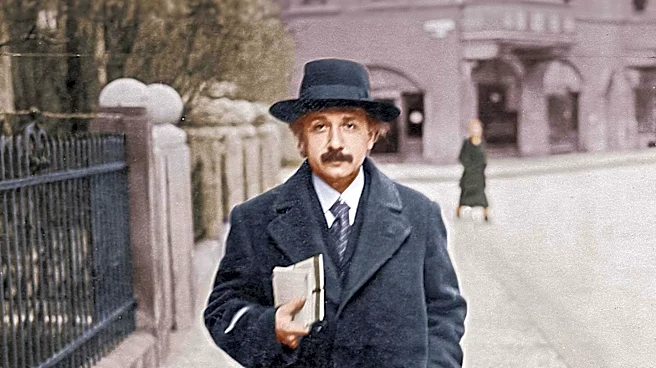
Albert Einstein did not author the letter that initiated the Manhattan Project; rather, Hungarian physicist Leo Szilard wrote it. Einstein signed the letter, dated August 2, 1939, because Szilard believed his prominent name would ensure President Franklin
Roosevelt would read it. The letter urged the president to secure uranium ore and fund atomic research, which was then confined to university laboratories. This communication ultimately led to the establishment of the Manhattan Project, a pivotal moment in the development of the atomic bomb. Einstein later expressed regret for his involvement, stating in 1954 to Linus Pauling that signing the letter was a "great mistake," though he acknowledged the justification of preventing Nazi Germany from developing such a weapon first. He spent the remainder of his life advocating against nuclear proliferation, co-founding the Emergency Committee of Atomic Scientists in 1946 and signing the Russell-Einstein Manifesto in 1955, which called for peaceful resolution of international conflicts.
Why It's Important?
This re-evaluation of Einstein's role is important as it clarifies the historical narrative surrounding the inception of the Manhattan Project and the development of nuclear weapons. It highlights the critical, yet often overlooked, contribution of Leo Szilard in recognizing the potential for atomic warfare and proactively engaging with political leadership. The revelation that Einstein's signature was primarily a strategic move to gain presidential attention underscores the influence of scientific authority in policy-making during a time of global crisis. Furthermore, Einstein's subsequent regret and lifelong advocacy against nuclear weapons emphasize the profound ethical dilemmas faced by scientists whose discoveries have far-reaching societal and geopolitical consequences. This historical context provides valuable lessons on the responsibility of scientific communities and the complex interplay between scientific advancement, political urgency, and moral considerations.
What's Next?
The ongoing discussion and clarification of historical events surrounding the Manhattan Project will likely continue to inform public understanding of scientific ethics and the origins of nuclear technology. Educational institutions and historical organizations may incorporate these nuanced details into their curricula and exhibits, offering a more complete picture of the individuals and decisions that shaped the atomic age. Future historical research may further explore the contributions of other scientists involved in the early stages of nuclear research and their interactions with political leaders. The legacy of Einstein's regret and his anti-proliferation efforts will continue to serve as a touchstone for debates on arms control, the responsible use of technology, and the role of scientists in advocating for peace and global security.
Beyond the Headlines
Beyond the immediate historical correction, this story delves into the deeper implications of scientific responsibility and the ethical considerations inherent in groundbreaking discoveries. It raises questions about the moral obligations of scientists when their work has the potential for both immense benefit and catastrophic destruction. Einstein's initial involvement, driven by the fear of Nazi Germany developing an atomic bomb, and his later remorse, illustrate the complex moral landscape scientists navigate during wartime. The narrative also highlights the power dynamics between scientific expertise and political decision-making, where the credibility of a renowned figure like Einstein was leveraged to influence a president. This historical episode serves as a powerful reminder of the long-term societal impact of scientific advancements and the continuous need for ethical reflection and advocacy within the scientific community, particularly concerning technologies with dual-use potential.