


What's Happening?
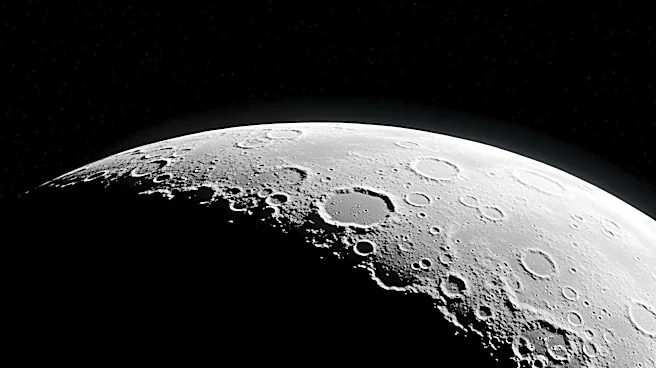
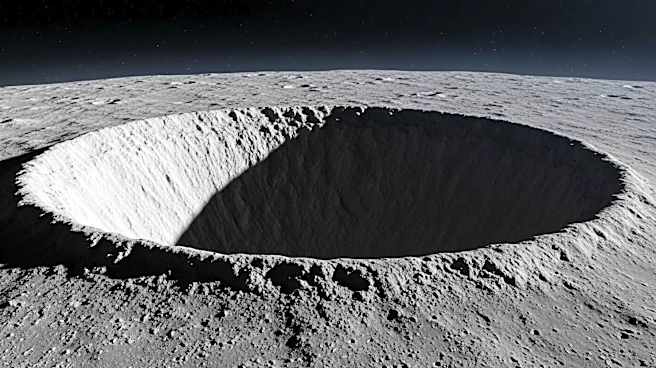
NASA's Artemis 2 mission, which launched on April 1, successfully completed a 10-day journey around the far side of the moon. The mission involved four astronauts who captured stunning images of the lunar surface, offering new perspectives on the moon's
far side. These images were taken in collaboration with astrophotographer Andrew McCarthy, who proposed the idea to Artemis 2 commander Reid Wiseman. McCarthy's technique involves stacking multiple images to enhance color and detail, revealing features not visible to the naked eye. The mission's photographs showcase the moon's diverse mineral composition, with colors indicating different materials such as titanium-rich basalts and iron-rich soils.
Why It's Important?
The Artemis 2 mission's success in capturing detailed images of the moon's far side is significant for several reasons. It provides valuable scientific data that can enhance our understanding of the moon's geology and composition. The images reveal the distribution of minerals, which can inform future lunar exploration and potential resource utilization. Additionally, the collaboration between NASA and McCarthy highlights the potential for innovative partnerships in space exploration, combining scientific expertise with artistic techniques to produce new insights. This mission also serves as a precursor to future Artemis missions, which aim to establish a sustainable human presence on the moon.
What's Next?
Following the successful completion of Artemis 2, NASA plans to continue its Artemis program with future missions aimed at landing astronauts on the lunar surface. These missions will build on the data collected during Artemis 2, using the insights gained to inform landing site selection and exploration strategies. The images captured by the Artemis 2 crew will be further analyzed to identify areas of interest for scientific study and potential resource extraction. As NASA prepares for these upcoming missions, the collaboration with astrophotographers like McCarthy may continue to play a role in enhancing the visual documentation of lunar exploration.