

What's Happening?
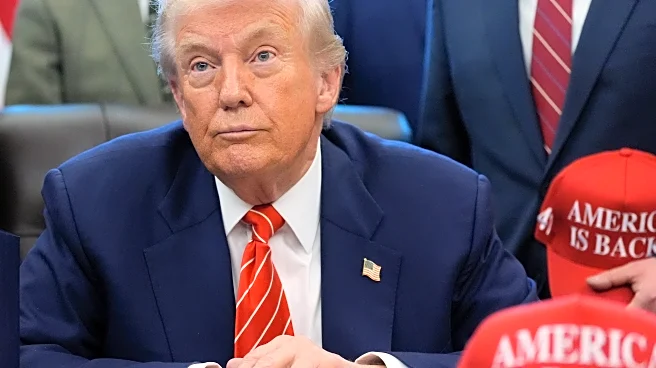
President Trump has introduced a proposal requiring countries to contribute $1 billion to secure a permanent seat on the newly established Gaza 'Board of Peace'. This initiative aims to fund reconstruction efforts in the Gaza Strip. The White House confirmed
that while temporary membership on the board does not require a fee, permanent membership is contingent upon this substantial financial contribution. The Board of Peace, chaired by President Trump, is tasked with overseeing the rebuilding of Gaza and establishing a stable governance structure. The initiative is part of a broader peace plan, which includes disarming Hamas and transitioning control to international peacekeepers and a technocratic government. Despite the plan's ambitious goals, challenges remain, particularly with Hamas's refusal to disarm.
Why It's Important?
The establishment of the Board of Peace and the associated financial requirements underscore the U.S. administration's strategic approach to Middle Eastern diplomacy under President Trump. By tying financial contributions to board membership, the U.S. seeks to incentivize international investment in Gaza's reconstruction and stability. This move could significantly impact U.S. relations with countries involved in the peace process, particularly those like Turkey and Qatar, which have reportedly secured spots on the board. The initiative also highlights the complexities of Middle Eastern geopolitics, as evidenced by Israel's dissatisfaction with the board's composition. The success of this plan could reshape power dynamics in the region and influence future U.S. foreign policy.
What's Next?
The next steps involve the implementation of phase two of the Gaza peace plan, which requires Hamas to disarm and cede control to international peacekeepers. The success of this phase is crucial for the plan's progression and the establishment of a technocratic government led by Dr. Ali Sha'ath. The international community's response, particularly from countries interested in permanent board membership, will be pivotal. Additionally, the U.S. administration will need to navigate diplomatic tensions with Israel and other regional stakeholders to ensure the plan's viability.