






What's Happening?
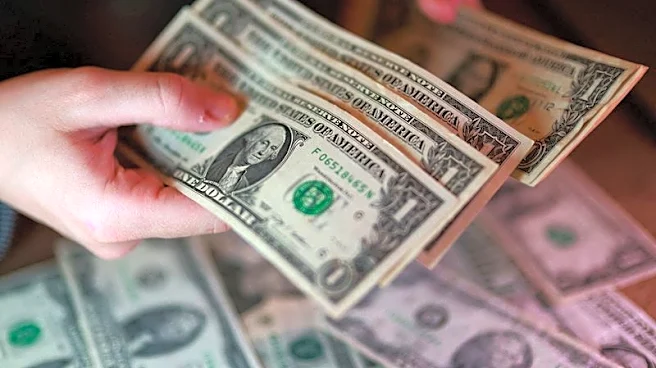
A recent poll indicates that Americans' concerns about inflation have reached unprecedented levels. The Center Square Voters' Voice Poll, conducted in early June, reveals that 43% of registered voters now rank inflation among their top three concerns,
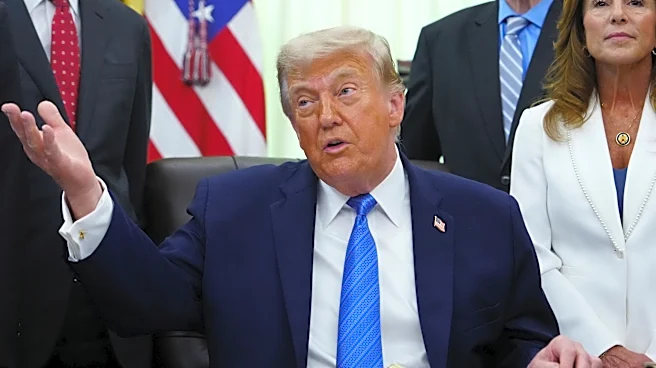
a significant increase from 37% in March. This comes as federal data confirms that consumer prices have hit a three-year high, with annual inflation reaching 4.2% in May, largely driven by rising energy costs. The poll highlights that inflation has become the dominant political issue ahead of the upcoming midterm elections, posing a challenge to President Trump's political appeal, which has traditionally been rooted in economic competence. The survey also shows a broader economic pessimism, with 76% of Americans believing the economy is worsening, marking the highest level of economic concern during Trump's second term.
Why It's Important?
The rising concern over inflation is reshaping the political landscape as the midterm elections approach. Inflation has emerged as a critical voter issue, potentially undermining the Republican Party's defense of its narrow congressional majorities. President Trump's political strength has historically been linked to perceptions of economic management, making the current shift in voter sentiment particularly significant. The increase in energy costs, exacerbated by the conflict in Iran, has contributed to the inflationary pressures, complicating the Federal Reserve's ability to consider interest rate cuts. The growing economic pessimism among voters could influence electoral outcomes, as economic issues often play a pivotal role in shaping voter behavior.
What's Next?
Inflation is expected to remain a central focus in the coming months, with new Consumer Price Index (CPI) data anticipated to provide further insights into price trends. The ongoing conflict in Iran and its impact on global energy markets will continue to influence fuel prices, which are a major component of the inflationary pressures. Political leaders, including President Trump, will likely face increased scrutiny over their handling of economic issues, particularly as voters express growing dissatisfaction with the current economic conditions. The administration's response to these challenges and its ability to address inflation concerns will be closely watched as the midterm elections draw nearer.