







What's Happening?
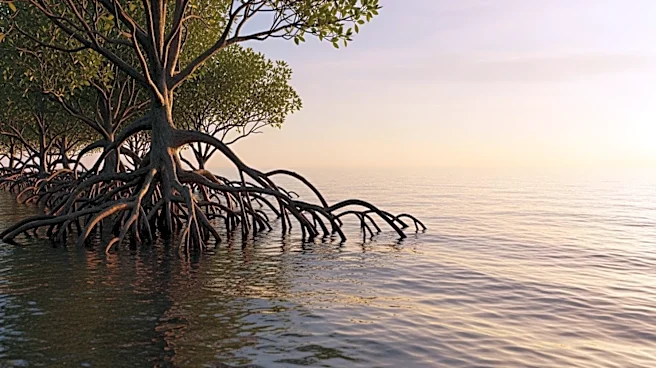
A new study led by researchers from the University of Exeter, in collaboration with partners in Colombia and the United States, has revealed that rising sea levels could significantly impact the ability of mangrove forests to store carbon. Mangroves,
which occupy less than 1% of Earth's surface, are crucial carbon sinks, holding about 15% of all carbon stored in ocean ecosystems. The study utilized a computer model to simulate the effects of sea-level rise on carbon storage across mangrove forests. While some areas may initially see an increase in carbon accumulation, the overall capacity of these forests to store carbon is expected to decline over the next century. The research highlights that as sea levels rise, mangroves may 'drown,' leading to dieback and erosion of carbon-rich soils, potentially turning these ecosystems from carbon sinks into carbon sources.
Why It's Important?
The findings of this study are significant as they underscore the vulnerability of mangrove ecosystems to climate change. Mangroves not only serve as vital carbon stores but also protect coastal areas from storms, support biodiversity, and provide livelihoods for coastal communities. The potential decline in their carbon storage capacity could exacerbate climate change by releasing stored carbon back into the atmosphere. This research emphasizes the need for comprehensive coastal management strategies that consider the entire coastal landscape to mitigate the impacts of climate change on these critical ecosystems. The study's insights could inform policymakers and conservationists in developing effective measures to protect and preserve mangrove forests.
What's Next?
The study suggests that future conservation efforts should focus on understanding and managing the broader coastal landscape to protect mangrove ecosystems effectively. As sea levels continue to rise, it will be crucial to monitor and adapt management practices to ensure the resilience of mangroves. Policymakers may need to consider integrating mangrove conservation into broader climate change mitigation strategies. Additionally, further research could explore adaptive measures that could enhance the resilience of mangroves to rising sea levels, such as restoring degraded areas and implementing sustainable land-use practices.
Beyond the Headlines
The study highlights the complex interplay between natural ecosystems and climate change, illustrating how changes in one aspect of the environment can have cascading effects on others. The potential shift of mangroves from carbon sinks to carbon sources could have long-term implications for global carbon cycles and climate regulation. This research also raises ethical considerations regarding the responsibility of human societies to protect and preserve natural ecosystems that play a crucial role in maintaining planetary health. The findings could prompt a reevaluation of current environmental policies and encourage a more holistic approach to ecosystem management.