





What's Happening?
The Northwest Arctic Subsistence Regional Advisory Council has once again recommended a reduction in caribou hunting limits, proposing a four-bull per year limit on federal lands in the Northwest Arctic, Seward Peninsula, and southwest North Slope. This
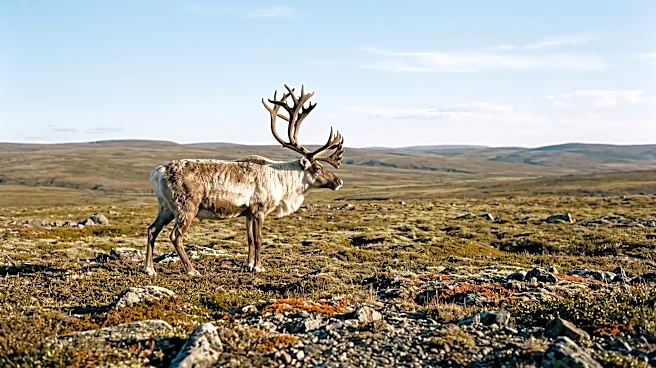
recommendation comes as the Western Arctic Caribou Herd continues to shrink, having lost approximately half its animals in the last six years. Raymond Lee of Buckland cast the sole dissenting vote, arguing that families rely on cow caribou for winter sustenance when bulls are not suitable for consumption. The council also unanimously voted to recommend the same limit to the Alaska Board of Game, which currently allows Alaska residents to take 15 bulls annually in certain units. The latest estimate for the herd in 2025 was 121,000 animals, the lowest in nearly 50 years, and cow hunting is now closed under state and federal rules.
Why It's Important?
This recommendation is crucial for the ecological balance and the subsistence lifestyle of numerous communities in the Northwest Arctic. The Western Arctic Caribou Herd is a central food source for dozens of communities, and its drastic decline poses a significant threat to food security and cultural practices. The debate over hunting limits highlights the tension between conservation efforts and the immediate needs of local populations. The council's push for stricter limits underscores the urgency of the situation, as the herd's numbers are at a near 50-year low. The differing views, such as Raymond Lee's, emphasize the complex socio-economic factors at play, where traditional reliance on caribou for winter sustenance conflicts with the need to protect the dwindling herd. The outcome of these recommendations will directly impact both the caribou population's recovery and the livelihoods of indigenous communities.
What's Next?
The Alaska Board of Game is scheduled to address these proposals in January, including the recommended lower bull limit, ending nonresident hunting, and predator control measures. One proposal even suggests halting all caribou hunting, including for local hunters, if the herd's population drops to 75,000 animals. The Alaska Department of Fish and Game is still formulating its official recommendations but has indicated that eliminating cow harvest and reducing bull limits are necessary. After January, the board is not slated to reconsider the region's hunting rules until 2030, unless emergency actions are taken. This upcoming meeting will be critical in determining the future of caribou hunting regulations and the long-term health of the Western Arctic Caribou Herd, with significant implications for both wildlife conservation and the subsistence practices of local communities.
Beyond the Headlines
The shrinking Western Arctic Caribou Herd and the proposed hunting restrictions reveal deeper issues beyond wildlife management, touching upon climate change, resource management, and indigenous rights. The late arrival of caribou in recent years, attributed by biologists and subsistence hunters to environmental shifts, forces hunters to travel greater distances, increasing costs and impacting traditional hunting grounds. This situation highlights the vulnerability of traditional subsistence economies to ecological changes and the need for adaptive management strategies. The discussion also brings to light the role of external factors, such as flights for out-of-town hunters and industrial activities, in disrupting caribou migration patterns. The council's efforts to protect the herd are not just about animal numbers but about preserving a way of life and ensuring the continuity of cultural heritage for future generations, as emphasized by council member Mike Kramer's desire for his son to also hunt caribou.