







What's Happening?
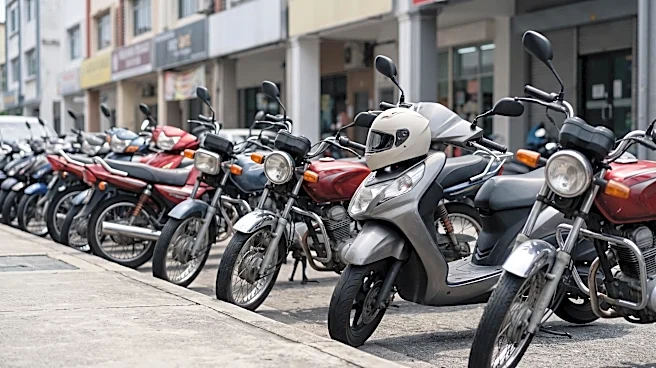
In Chhatrapati Sambhajinagar, traffic police initiated a stringent crackdown on two-wheeler riders not wearing helmets. On the first day of this enforcement drive, 4,120 riders were penalized, resulting in total fines amounting to 40 lakh 91 thousand
rupees. The police department had previously conducted awareness campaigns and issued warnings regarding the mandatory use of helmets. Despite these efforts, a significant number of riders were found to be non-compliant, leading to the large-scale issuance of fines. The administration emphasized that the primary goal of this initiative is to enhance road safety and prevent severe head injuries in the event of accidents, rather than solely collecting revenue through penalties. This action follows repeated appeals to the public to adhere to helmet regulations for their own protection.
Why It's Important?
This enforcement action highlights a critical public safety issue concerning road accidents and the importance of protective gear. The substantial number of fines issued in a single day underscores a widespread disregard for helmet laws, which are designed to mitigate serious injuries and fatalities. For individuals, non-compliance carries significant financial penalties and, more critically, exposes them to life-threatening risks in traffic incidents. For the community, a high rate of helmet use can lead to a reduction in accident-related healthcare burdens and improved overall road safety. The administration's firm stance signals a commitment to enforcing traffic laws, which could serve as a deterrent and encourage greater adherence to safety regulations, ultimately saving lives and reducing the societal costs associated with road trauma.
What's Next?
The traffic police and administration in Chhatrapati Sambhajinagar have indicated that this strict enforcement drive is not a one-off event but will continue with intensified efforts. They plan to maintain a rigorous approach against helmet violations, suggesting that similar crackdowns will be a regular occurrence. The public is being urged to prioritize their safety by purchasing and consistently wearing helmets, rather than facing recurring fines. This ongoing campaign is expected to lead to a sustained increase in helmet compliance among two-wheeler riders. Authorities will likely monitor the effectiveness of these measures, potentially adjusting their strategies based on observed changes in rider behavior and accident statistics. The long-term goal is to instill a culture of road safety where helmet use becomes a standard practice.
Beyond the Headlines
Beyond the immediate impact of fines and increased helmet use, this initiative touches upon broader aspects of public responsibility and governance. The administration's emphasis on safety over revenue collection aims to foster a sense of civic duty among citizens. It also raises questions about the efficacy of prior awareness campaigns and the need for more impactful public education strategies. The high number of violations suggests a potential disconnect between public understanding of safety risks and their behavioral choices. This situation could prompt a re-evaluation of how traffic laws are communicated and enforced, potentially leading to more comprehensive road safety programs that combine education, infrastructure improvements, and consistent enforcement to achieve lasting behavioral change and reduce road fatalities.