
What's Happening?
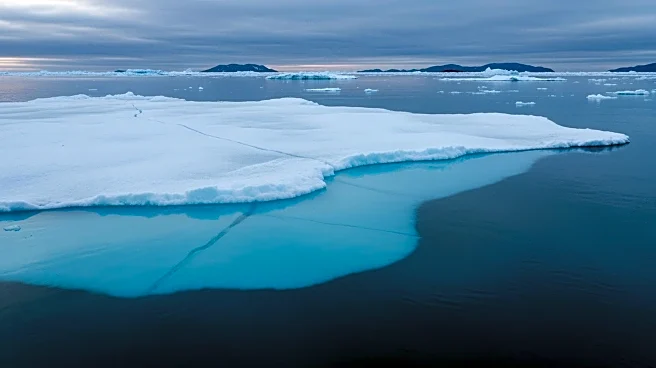
The Canadian Arctic, historically covered by thick ice, is becoming increasingly navigable due to climate change. In a recent expedition, the Canadian icebreaker CCGS Amundsen explored waters around the Queen
Elizabeth Islands and western Tuvaijuittuq, areas previously inaccessible. Researchers from Fisheries and Oceans Canada and the University of Manitoba led this expedition, marking the first comprehensive oceanographic research in the region. The ice, once impenetrable, is now heavily melted, with the thickest ice found being around seven meters. This change is attributed to climate change, which has weakened the multi-year ice, increasing the area of open water. While this development allows for scientific exploration, it poses significant risks to northern indigenous communities, threatening their food security. Additionally, the receding ice has geopolitical implications, with increased activity from Russia and China in the region. Russia, in particular, is using the Northern Sea Route to bypass western sanctions on its energy exports.
Why It's Important?
The melting ice in the Canadian Arctic has profound implications for both the environment and international relations. For indigenous communities, the loss of ice threatens traditional food sources, potentially destabilizing their way of life. Environmentally, the increased navigability raises the risk of accidents and oil spills, which could devastate the fragile Arctic ecosystem. Geopolitically, the opening of new shipping routes has attracted interest from global powers like Russia and China, potentially leading to increased tensions. Russia's use of the Northern Sea Route to evade sanctions highlights the strategic importance of the Arctic, as well as the potential for conflict over these newly accessible waters. The situation underscores the need for international cooperation to manage these changes responsibly.
What's Next?
As the Arctic continues to warm, further exploration and commercial activity in the region are likely. This will require careful management to balance economic interests with environmental protection. International agreements may need to be revisited or established to address the geopolitical tensions and environmental risks associated with increased Arctic navigation. Indigenous communities will need support to adapt to the changing environment, ensuring their food security and cultural preservation. The global community will need to monitor the situation closely, as the Arctic's transformation could have far-reaching consequences for climate policy and international relations.
Beyond the Headlines
The melting Arctic ice is a stark reminder of the broader impacts of climate change, highlighting the urgent need for global action to reduce greenhouse gas emissions. The situation also raises ethical questions about the exploitation of newly accessible natural resources and the responsibility of nations to protect vulnerable ecosystems and communities. Long-term, the changes in the Arctic could lead to shifts in global shipping patterns, with economic implications for traditional trade routes. The increased presence of military and commercial vessels in the region could also lead to a militarization of the Arctic, further complicating international relations.