

What's Happening?
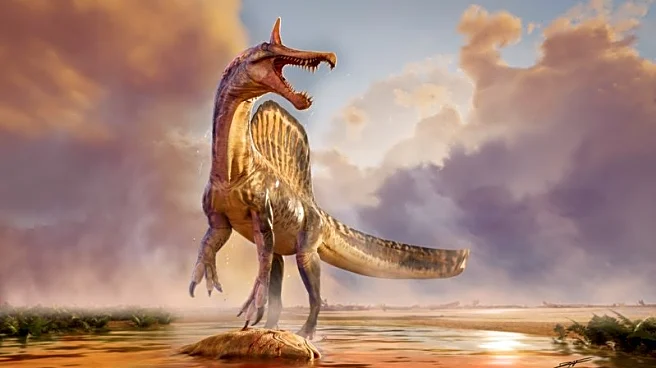
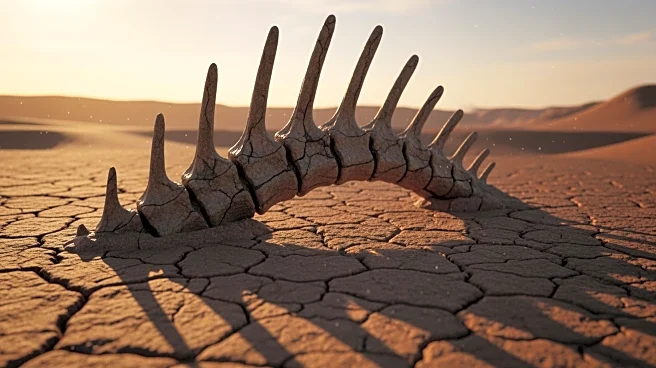
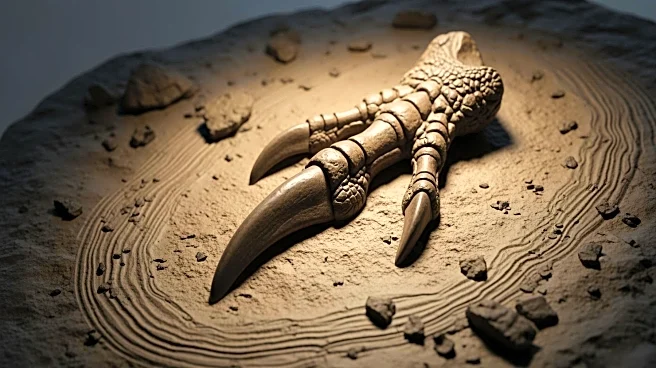
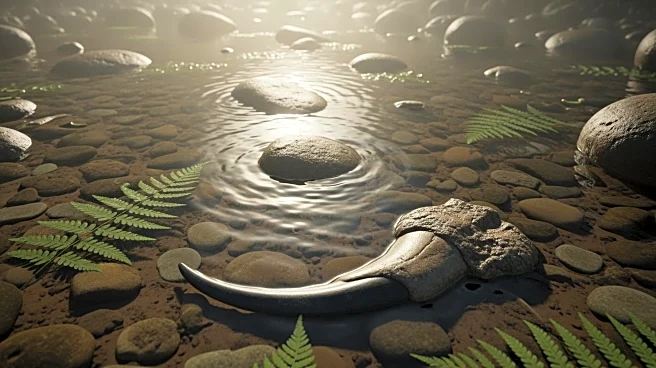
Scientists have unearthed fossils of a new species of Spinosaurus, named Spinosaurus mirabilis, in the Sahara desert of Niger. This dinosaur, notable for its large blade-shaped head crest and interlocking teeth, is the second known species of Spinosaurus.
It lived approximately 95 million years ago during the Cretaceous Period, hunting large fish in the region's waterways. The Spinosaurus mirabilis is distinguished by its larger crest compared to its relative, Spinosaurus aegyptiacus, and features a more elongated snout and longer hind limbs. The discovery was made in a remote area, far from the nearest ocean shoreline, suggesting it was a shallow-water predator rather than fully aquatic.
Why It's Important?
The discovery of Spinosaurus mirabilis provides significant insights into the diversity and adaptation of dinosaurs in prehistoric ecosystems. It challenges previous assumptions about the habitat and lifestyle of Spinosaurus species, suggesting a more complex ecological role than previously understood. This finding contributes to the broader understanding of dinosaur evolution and their adaptation to different environments. The unique features of Spinosaurus mirabilis, such as its large crest and elongated snout, highlight the evolutionary adaptations that allowed it to thrive in its environment, offering new perspectives on the ecological dynamics of the Cretaceous Period.
What's Next?
Further research and excavation in the Sahara region may uncover additional fossils, providing more comprehensive insights into the Spinosaurus genus and its ecological niche. Scientists may also explore the implications of this discovery on the understanding of dinosaur evolution and their adaptation strategies. The findings could lead to a reevaluation of the ecological roles of large predatory dinosaurs and their interactions with other species in their habitats.
Beyond the Headlines
The discovery of Spinosaurus mirabilis raises questions about the evolutionary pressures that led to its unique adaptations, such as the large cranial crest. These features may have played roles in social behaviors like mating displays or territorial disputes. The study of Spinosaurus mirabilis also contributes to the ongoing debate about the aquatic capabilities of Spinosaurus species, providing evidence that supports a more terrestrial lifestyle with adaptations for shallow-water hunting.