

What's Happening?
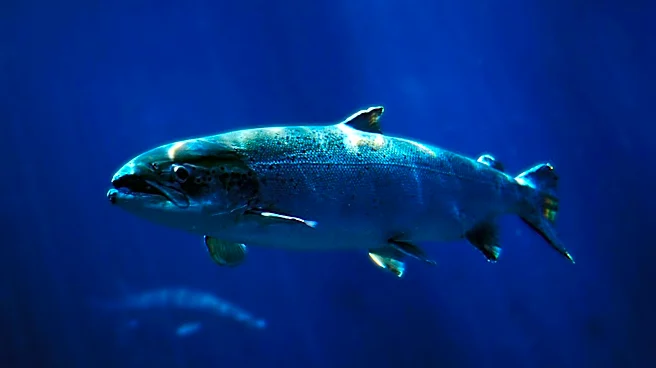
At the Hatfield Marine Science Center in Newport, Oregon, scientists, students, and volunteers are conducting a mass fish necropsy to study juvenile salmon. This annual event, organized by Oregon State University and the National Ocean and Atmospheric
Administration, helps researchers understand how young salmon are faring in the ocean. By examining thousands of fish, scientists gather data on growth patterns, ocean entry, and survival rates. The necropsy provides valuable insights into salmon populations, which have been affected by environmental changes and human activities.
Why It's Important?
The necropsy is crucial for understanding the health and future of salmon populations, which are vital to the ecosystem and economy of the Pacific Northwest. Salmon are a key species, supporting commercial and recreational fishing industries. The data collected helps forecast salmon returns, informing conservation efforts and management strategies. As climate change impacts ocean conditions, this research becomes increasingly important for adapting policies to ensure sustainable salmon populations.
What's Next?
Scientists will analyze the data collected during the necropsy to identify trends and make predictions about future salmon returns. The findings will be shared with fishery managers and policymakers to guide conservation efforts. As climate change introduces new challenges, researchers may need to expand their focus to include predator dynamics and other environmental factors affecting salmon survival.