



What's Happening?
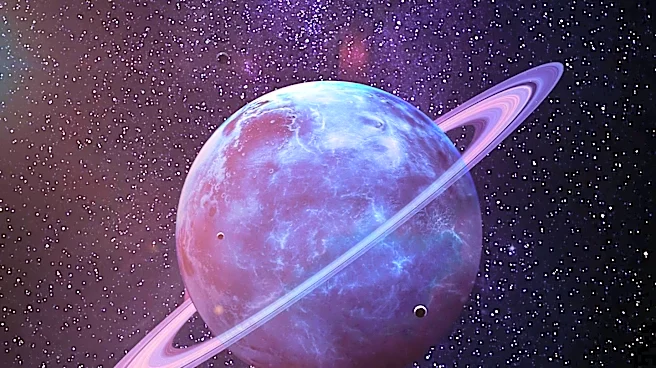
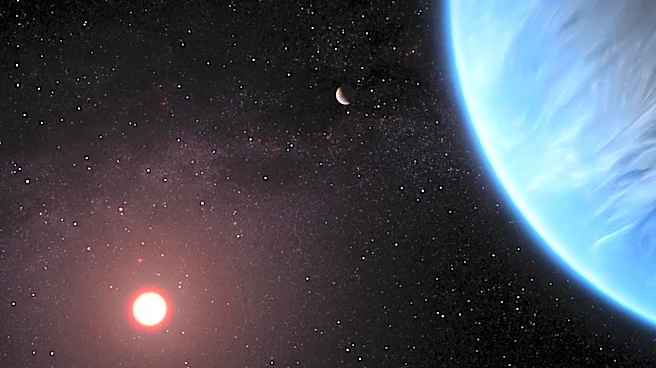
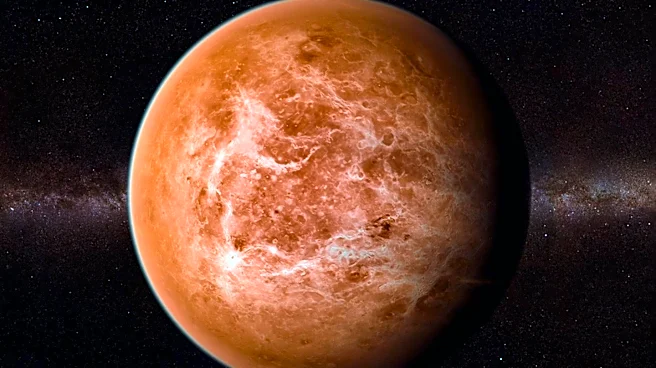
A nine-year microlensing survey has revealed that the Milky Way contains approximately 20 free-floating planets for every star. These planets, often low in mass, drift through the galaxy without a host star. The study, led by Takahiro Sumi of Osaka University,
utilized data from the MOA-II survey conducted between 2006 and 2014. The findings suggest that many of these planets were ejected from their original solar systems. The survey's results challenge previous estimates and highlight the prevalence of smaller, Earth-mass objects in the galaxy.
Why It's Important?
The discovery of a vast number of free-floating planets has significant implications for our understanding of planetary formation and the dynamics of solar systems. These findings suggest that planetary ejection is a common occurrence, reshaping theories about the stability and evolution of planetary systems. The presence of numerous low-mass planets also raises questions about the potential for life and the conditions necessary for habitability. This research contributes to the broader field of exoplanet studies and informs future missions aimed at detecting and studying these elusive objects.
What's Next?
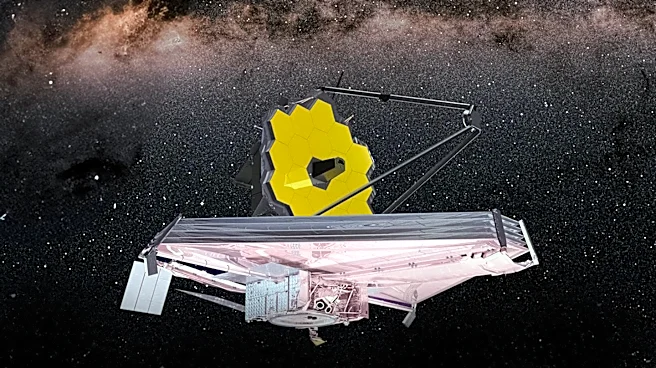
NASA's Nancy Grace Roman Space Telescope, set to launch by May 2027, will conduct a microlensing survey from space, providing more precise data on free-floating planets. This mission is expected to detect hundreds of Earth-mass planets, offering a clearer picture of their distribution and characteristics. The Roman Telescope's findings will either confirm or refine the current estimates, enhancing our understanding of the galaxy's planetary population. Ground-based partners, such as Japan's PRIME telescope, will complement these efforts, further advancing the study of free-floating planets.