
What's Happening?
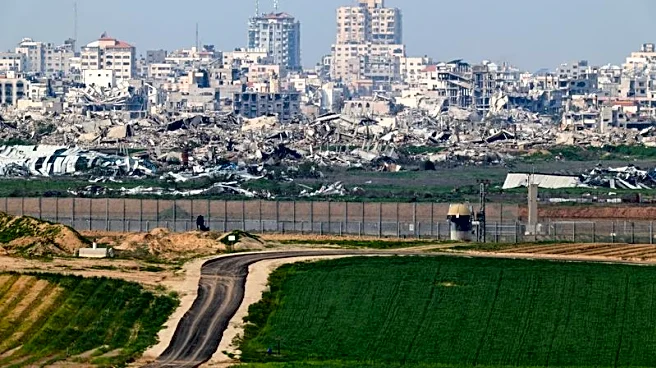
Hamas has renewed its search for the remains of Ran Gvili, a slain Israeli Border Police officer, in Gaza City's Zeitoun neighborhood. This area is close to the Gaza border and within sight of Israeli Defense
Forces (IDF) troops. The search is taking place near the 'yellow line,' a demarcation adjacent to the border. Israel has indicated that the reopening of the Rafah crossing, a key transit point, is contingent upon the return of Gvili's remains. This development follows reports of Israel's covert operations in Gaza, including the abduction of an Islamic Jihad operative, to locate Gvili's body. The remains were reportedly transferred from Islamic Jihad to Hamas, with coordination between the factions. Despite efforts, terrorist organizations claim that attempts to locate Gvili have been unsuccessful.
Why It's Important?
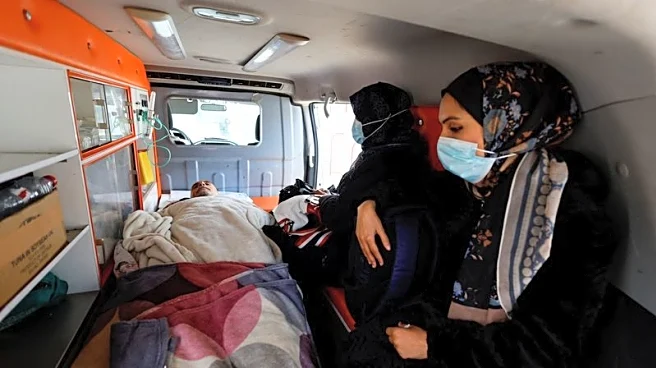
The search for Ran Gvili's remains is significant as it impacts the broader geopolitical dynamics between Israel and Gaza-based factions. The potential reopening of the Rafah crossing is a critical issue, as it affects the movement of people and goods, influencing the humanitarian and economic situation in Gaza. The involvement of Qatari mediation highlights the international dimension of the conflict, with external actors playing roles in negotiations. The situation underscores the fragile nature of ceasefire agreements and the ongoing tensions between Israel and Palestinian factions, which have broader implications for regional stability and security.
What's Next?
The next steps involve potential diplomatic negotiations facilitated by Qatari mediators to resolve the issue of Gvili's remains. The reopening of the Rafah crossing hinges on these negotiations, which could lead to a new phase in the agreement between Israel and Hamas. The outcome may influence future interactions and agreements between the parties. Additionally, the international community, including regional powers, may increase their involvement to ensure stability and prevent further escalation.