

What's Happening?
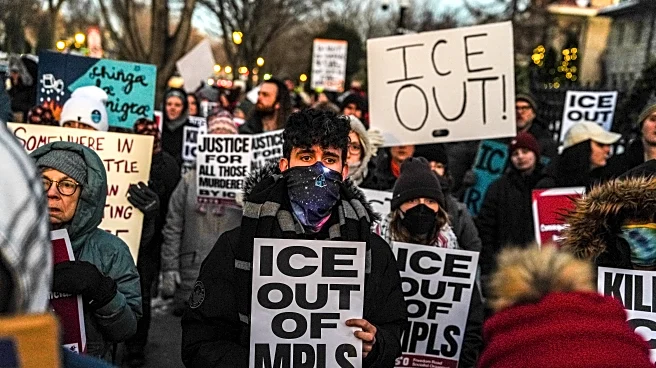
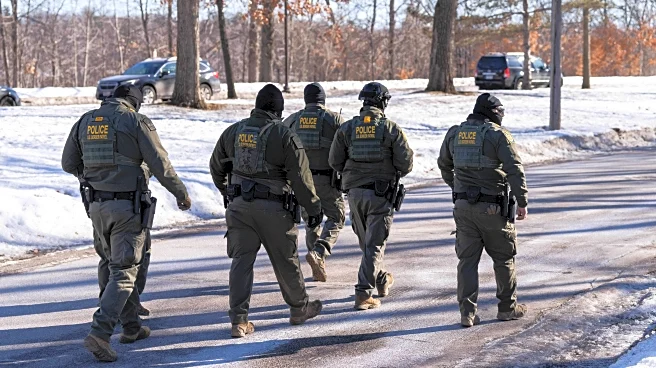
A federal judge has mandated that the Department of Homeland Security (DHS) must ensure immigrants detained in Minnesota have immediate access to legal counsel upon detention and before any out-of-state transfers. This emergency restraining order, issued
by U.S. District Judge Nancy Brasel, addresses the logistical barriers faced by detainees at the Bishop Henry Whipple Federal Building in Minneapolis, which potentially infringe on their constitutional rights. The order, effective for two weeks unless extended, requires DHS to allow detainees to contact an attorney within one hour of detention and before transfer. The ruling follows a lawsuit by The Advocates for Human Rights and a detainee, highlighting inadequate access to legal representation and the rapid, often unnotified, transfer of detainees.
Why It's Important?
This ruling underscores the constitutional rights of detainees to legal representation, a fundamental aspect of the U.S. justice system. The decision could impact DHS operations, particularly in how it manages detainee transfers and access to legal counsel. It highlights ongoing tensions between immigration enforcement practices and civil rights, potentially influencing future legal standards and policies regarding detainee treatment. The ruling may also prompt other jurisdictions to reassess their procedures, ensuring compliance with constitutional mandates, thereby affecting the broader landscape of immigration enforcement in the U.S.
What's Next?
The temporary order may lead to further legal challenges or adjustments in DHS procedures to comply with constitutional requirements. Stakeholders, including immigration advocacy groups and legal organizations, are likely to monitor the situation closely, potentially leading to broader reforms in detainee rights and immigration enforcement practices. The DHS's response and any subsequent legal actions will be critical in determining the long-term implications of this ruling.