


What's Happening?
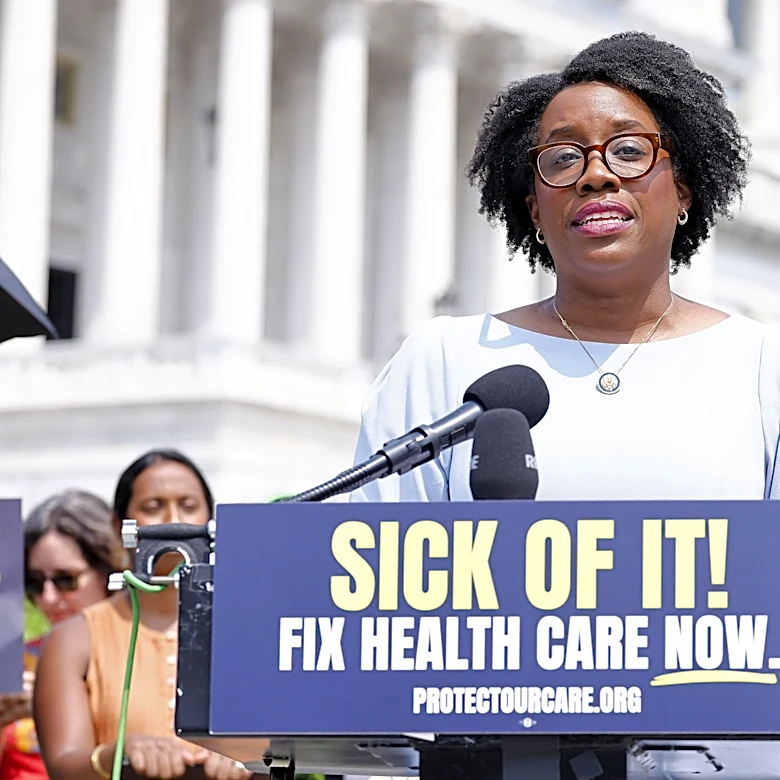
Representative Sara Jacobs, alongside Representative Don Beyer, is developing new legislation that will incorporate Independent Verification Organizations (IVOs) into the oversight of Artificial Intelligence (AI). This initiative was discussed at The
Curve conference, where Jacobs indicated that the bill, though not yet publicly released, would outline a protocol for increasing IVO capacity. The proposed legislation aims to establish a robust ecosystem for AI auditing, with a transitional phase where government entities might initially undertake some of these auditing responsibilities. This move comes amidst a growing consensus in Washington and Silicon Valley that third-party organizations, independent of industry or government, are crucial for effective AI oversight. The goal is to ensure regular assessments of AI companies' compliance with laws and the risks posed by their models, moving beyond self-regulation.
Why It's Important?
The establishment of an IVO regime for AI oversight holds significant implications for the U.S. technology sector and public policy. It seeks to address concerns about the rapid advancement of AI and the potential risks associated with it, ensuring greater accountability from AI developers. By mandating independent audits, the legislation could foster increased public trust in AI technologies and mitigate potential harms. For AI companies, this could mean a more standardized and rigorous regulatory environment, potentially increasing operational costs but also providing a clearer framework for development and deployment. The involvement of government in a transitional capacity highlights the urgency of building auditing capacity, which is currently limited. This approach could set a precedent for how emerging technologies are regulated, balancing innovation with safety and ethical considerations.
What's Next?
The next step involves the release of the bill text, which will provide more specific details on the proposed IVO regime and the mechanisms for ramping up auditing capacity. Following its introduction, the legislation will undergo the congressional review process, including committee hearings and potential amendments. Stakeholders, including AI companies, advocacy groups, and academic experts, are likely to engage in discussions and lobbying efforts to shape the final form of the bill. The success of this initiative will depend on its ability to attract bipartisan support and effectively address the challenges of recruiting and training a sufficient number of qualified AI auditors. The transitional role of the government in auditing could be a critical factor in bridging the current capacity gap while a sustainable IVO ecosystem is developed.
Beyond the Headlines
Beyond the immediate regulatory impact, this legislative effort touches upon deeper ethical and societal implications of AI. The push for independent oversight reflects a broader societal demand for transparency and accountability in powerful technological systems. It raises questions about the balance between fostering innovation and ensuring public safety, and how best to govern technologies that evolve at an unprecedented pace. The recruitment challenge for AI auditors highlights a critical skills gap in the emerging field of AI governance, suggesting a need for significant investment in education and training programs. Furthermore, the debate over IVOs could influence international standards for AI regulation, as the U.S. seeks to establish its leadership in responsible AI development. The long-term success of such a regime could redefine the relationship between technology companies, government, and the public, fostering a more collaborative approach to managing technological progress.