






What's Happening?
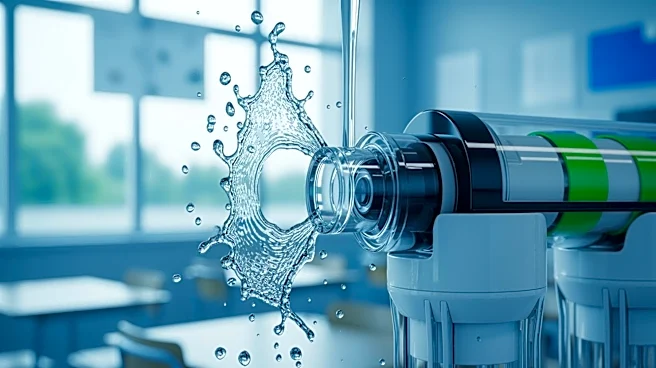
Michael Ramos, a building engineer at Von Steuben Metropolitan Science Center in Chicago, has developed an innovative device aimed at reducing lead levels in drinking water. The device, known as the Noah system, automatically flushes water every few hours
to prevent stagnation, which can lead to lead contamination. This invention comes in response to the widespread issue of lead in Chicago's water supply, particularly affecting schools. The device has been installed in various schools and residences, showing significant reductions in lead levels. Despite its success, the challenge remains in scaling the solution citywide due to budget constraints and the extensive infrastructure problem of lead pipes in Chicago.
Why It's Important?
The development of the Noah system is crucial as it addresses a significant public health issue—lead contamination in drinking water, which poses severe risks to children's health, including cognitive and behavioral problems. Chicago has the highest number of lead service lines in the U.S., and replacing these lines is a costly and time-consuming process. The Noah system offers an immediate, cost-effective solution to mitigate lead exposure while long-term infrastructure changes are underway. This innovation not only protects public health but also reduces the burden on school maintenance staff by automating the flushing process.
What's Next?
The future of the Noah system depends on its adoption across more schools and communities. While the device has proven effective, its widespread implementation is hindered by financial limitations and the need for greater awareness and support from educational and governmental bodies. Efforts are underway to secure more funding and partnerships to expand the system's reach. Additionally, the development of a new version of the device, which includes an app for monitoring, is in progress to enhance its functionality and appeal.
Beyond the Headlines
The introduction of the Noah system highlights broader issues of environmental justice and infrastructure inequality. Many affected communities are low-income areas where residents have limited resources to address such health hazards. This situation underscores the need for systemic changes in public policy and investment in infrastructure to ensure safe drinking water for all. The success of the Noah system could serve as a model for other cities facing similar challenges, promoting innovation in public health solutions.