






What's Happening?
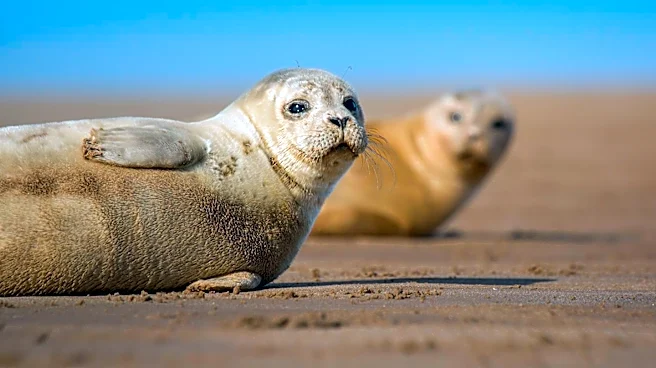
Researchers in the United States have developed and tested a vaccine for bird flu (H5N1) in seals, initially developed for dairy cattle. This vaccine has shown promising results, being well-tolerated by northern elephant seals and producing a measurable
antibody response. The trials were extended to endangered Hawaiian monk seals in rehabilitation, further demonstrating its potential. This development comes as Australia faces its first bird flu death in a mainland mammal, a long-nosed fur seal, highlighting the global spread and impact of the H5N1 virus on marine mammal populations. While this U.S. research is a significant step, it does not yet constitute a vaccination program for free-ranging seals, and the vaccine lacks regulatory approval for use in Australia.
Why It's Important?
The development of an H5N1 vaccine for seals in the U.S. is critically important given the devastating impact of bird flu on marine mammal populations worldwide. Outbreaks in regions like Argentina and South Georgia have led to massive mortality rates, with some colonies experiencing up to 95% pup deaths. These losses threaten already endangered species, pushing them closer to extinction. The U.S. research offers a potential tool to mitigate these catastrophic losses, particularly for vulnerable populations that can be reached and vaccinated. While a comprehensive vaccination program for all seals is impractical, targeted vaccination efforts could protect key populations and prevent further ecological damage, underscoring the urgent need for effective interventions against this evolving viral threat.
What's Next?
The immediate next steps involve further research and regulatory processes to potentially approve the vaccine for broader use in marine mammals. While the U.S. research is promising, it does not yet translate into a widespread vaccination program for free-ranging seals, and regulatory approval in countries like Australia is still pending. Australia, in particular, is urged to investigate targeted vaccination strategies for its endangered marine mammal populations, such as Australian sea lions and southern elephant seals on Macquarie Island. Continued surveillance of seal populations is crucial to track the virus's spread and evolution. The global scientific community will likely continue to collaborate on understanding H5N1's mammalian adaptation and developing effective countermeasures to protect wildlife.
Beyond the Headlines
The H5N1 bird flu crisis in marine mammals, and the U.S. efforts to develop a vaccine, highlight the complex interplay between animal health, environmental conservation, and global public health. The virus's ability to jump from birds to mammals and evolve to better replicate in them raises concerns about its potential to adapt further, posing a theoretical risk to human populations. This situation underscores the concept of 'One Health,' recognizing that the health of humans, animals, and the environment are interconnected. The ethical considerations of intervening in wild animal populations through vaccination are also significant, balancing the desire to protect endangered species with the challenges of large-scale implementation and potential ecological impacts. The ongoing research reflects a proactive approach to managing emerging infectious diseases that threaten biodiversity and potentially human health.