





What's Happening?
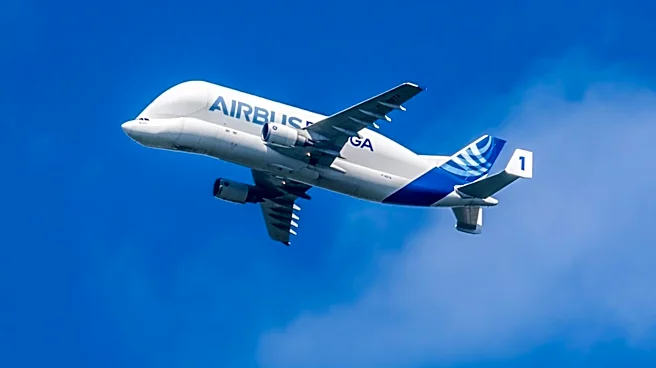
Neptune Aviation, based in Missoula, Montana, has taken delivery of an Airbus A319, marking the first time this aircraft type will be converted for aerial firefighting. The company plans to modify the A319 over an 18-month period at Commercial Jet in Dothan,
Alabama, with the aircraft expected to enter service for the 2028 firefighting season. The A319, previously operated by Braathens International Airways, offers a payload capacity of 17,000 liters, significantly more than Neptune's current BAe 146 fleet. The conversion involves extensive modifications, including the installation of retardant chutes and tank pumps, to prepare the aircraft for firefighting missions.
Why It's Important?
The introduction of the Airbus A319 into Neptune Aviation's fleet represents a significant advancement in aerial firefighting capabilities. With increased payload capacity and modern technology, the A319 is expected to enhance firefighting efficiency and response times. This development comes at a time when fire seasons are becoming longer and more intense, increasing the demand for effective firefighting resources. Neptune's expansion reflects the growing need for innovative solutions in combating wildfires, which pose significant risks to communities and ecosystems across the United States.
What's Next?
Neptune Aviation plans to acquire additional A319 aircraft while maintaining its existing BAe 146 fleet. The company is also upgrading its training simulator to better prepare pilots for the unique challenges of firefighting missions. As fire seasons continue to extend, Neptune anticipates high demand for its services from federal and state agencies. The successful integration of the A319 into firefighting operations could set a precedent for other companies to adopt similar strategies, potentially leading to broader changes in the aerial firefighting industry.
Beyond the Headlines
The conversion of the A319 for firefighting use highlights the evolving nature of emergency response strategies in the face of climate change. As wildfires become more frequent and severe, the need for advanced technology and efficient resource management becomes increasingly critical. This development also underscores the importance of collaboration between aviation companies and regulatory bodies to ensure safety and effectiveness in firefighting operations. Neptune's initiative may inspire further innovation in the sector, promoting sustainable practices and enhancing community resilience against natural disasters.