








What's Happening?
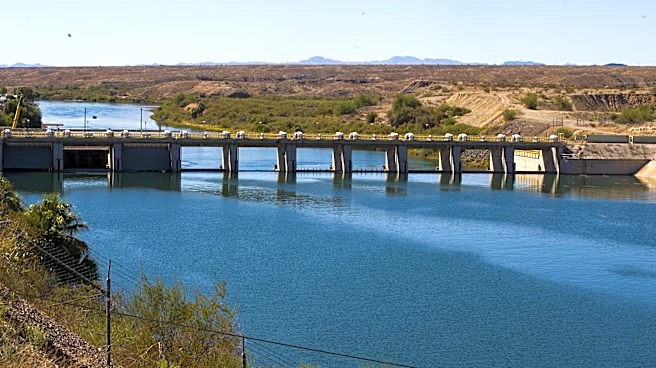
Recent rainfall in the D.C. region has not significantly alleviated concerns about the Potomac River's low flow, which is critical for the area's drinking water supply. Michael Nardolilli, executive director of the Interstate Commission on the Potomac River Basin,
noted that most rain fell downstream from the water intakes, failing to impact the water supply significantly. The river's flow is currently at 1,720 cubic feet per second, below the 2,000 cubic feet per second threshold that triggers daily drought monitoring. The situation highlights the ongoing risk of water shortages in the region.
Why It's Important?
The low flow of the Potomac River poses a significant risk to the D.C. area's water supply, affecting millions of residents. The situation underscores the importance of strategic water management and the need for effective drought response plans. As climate patterns continue to change, regions like D.C. may face more frequent and severe water shortages. This development highlights the need for infrastructure investments and policy measures to ensure a reliable water supply. The ongoing monitoring and potential for drought conditions could impact local economies and public health.
What's Next?
Local water suppliers, including WSSC Water, the Washington Aqueduct, and Fairfax Water, will continue to monitor the river's flow and implement drought response measures as needed. Authorities may consider additional water conservation efforts and public awareness campaigns to mitigate the impact of potential shortages. The situation will require ongoing assessment and collaboration among regional stakeholders to address the challenges posed by low water levels and ensure the sustainability of the water supply.