









What's Happening?
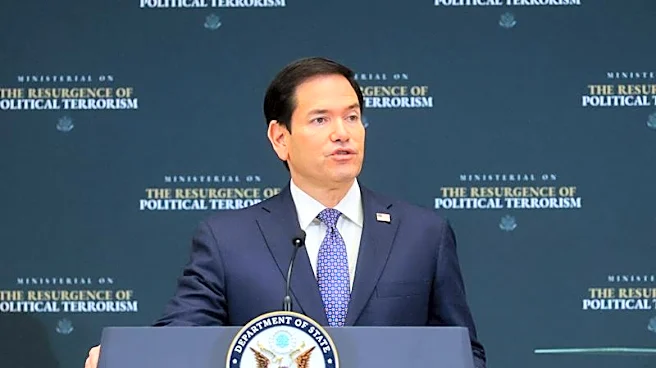
U.S. Representative Ilhan Omar has introduced a resolution urging the United States to join the International Criminal Court (ICC) by ratifying the Rome Statute. This move comes in response to Secretary of State Marco Rubio's recent pledge to dismantle
the ICC. Omar's resolution aims to counter the Trump administration's efforts to undermine the court, which include imposing sanctions and visa restrictions on ICC officials. Omar argues that joining the ICC would strengthen the rule of law globally and demonstrate the U.S.'s commitment to human rights. The resolution also seeks to pressure the administration to lift existing sanctions against the court. Omar's stance highlights a significant policy divide within the U.S. government regarding international justice and accountability.
Why It's Important?
Omar's resolution underscores the ongoing debate over the U.S.'s role in international justice. By advocating for ICC membership, Omar positions the U.S. as a potential leader in upholding international law and human rights. This contrasts sharply with the Trump administration's approach, which views the ICC as a threat to U.S. sovereignty. The resolution could influence public opinion and legislative action, potentially leading to a reevaluation of U.S. foreign policy priorities. If successful, joining the ICC could enhance the U.S.'s credibility in promoting global justice and accountability, but it may also face significant political resistance domestically.
What's Next?
The resolution's introduction is likely to spark further debate in Congress and among the public. It may lead to hearings and discussions on the U.S.'s relationship with the ICC and international law. The Trump administration is expected to continue its efforts to weaken the ICC, potentially escalating diplomatic tensions with countries that support the court. Omar's resolution could also galvanize support from human rights organizations and international allies, who may advocate for the U.S. to take a more active role in the ICC. The outcome of this legislative effort will have implications for U.S. foreign policy and its commitment to international justice.