

What's Happening?
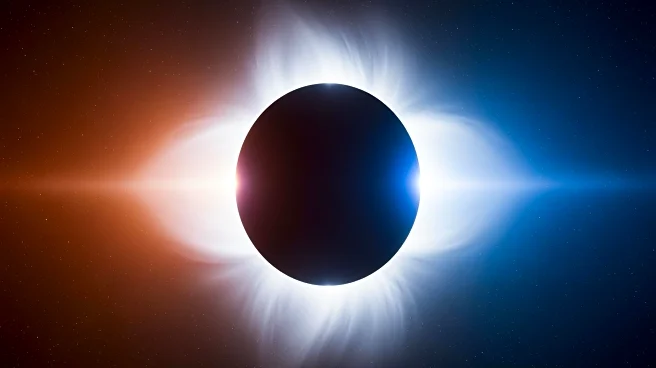
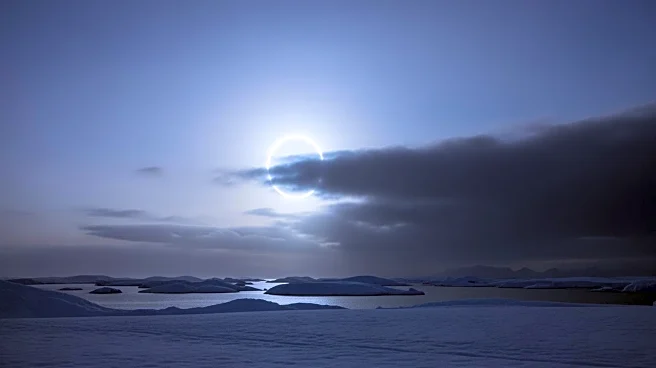
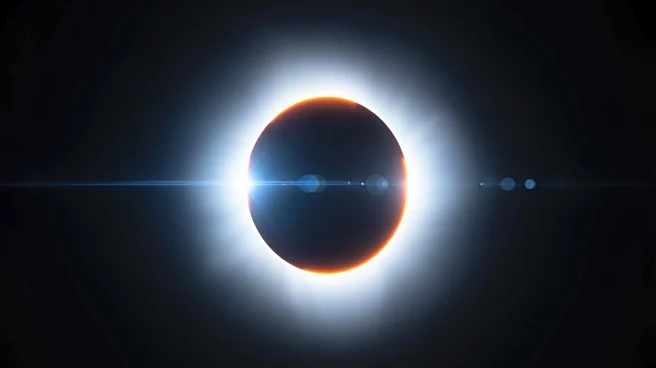
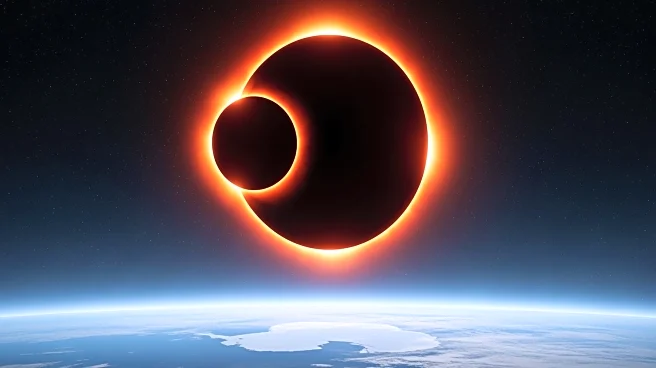
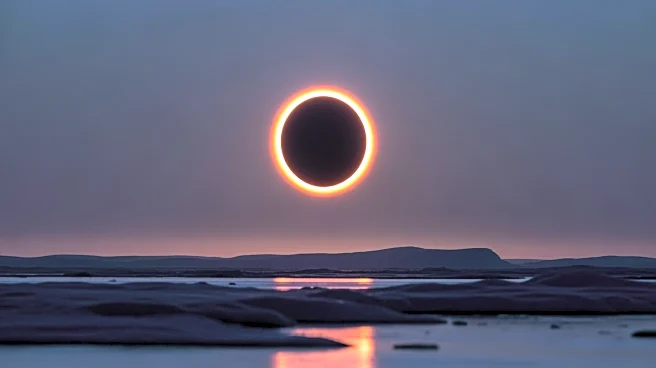
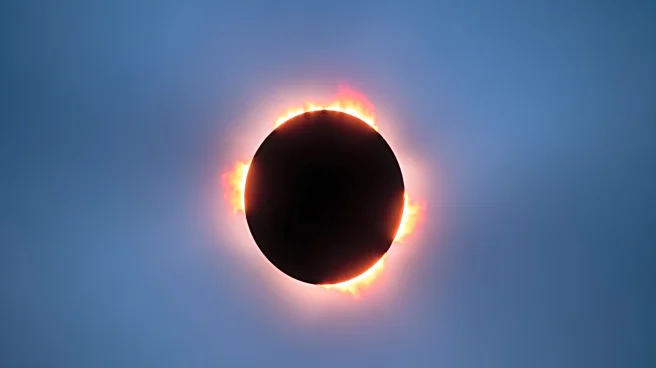
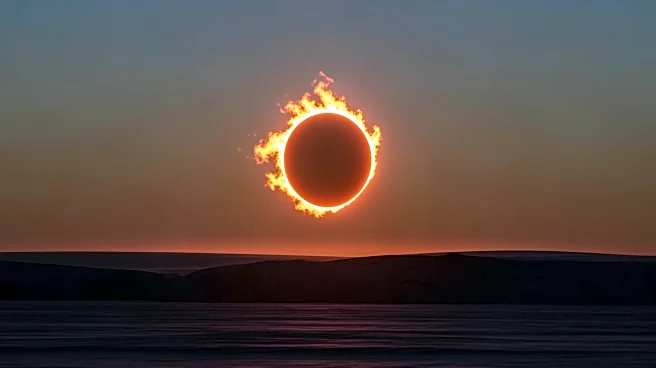
An annular solar eclipse occurred over Antarctica on February 17, 2026, creating a 'ring of fire' effect as the moon passed in front of the sun. This celestial event was visible only to a few observers in Antarctica, where the moon's disk covered most
of the sun, leaving a thin ring of sunlight visible. The eclipse began at 4:56 a.m. EST and reached its peak, known as annularity, for a little over two minutes. A partial eclipse was also visible to approximately 176 million people across the southern tip of South America and parts of southern Africa, including Madagascar. The eclipse concluded globally at 9:27 a.m. EST.
Why It's Important?
This annular eclipse is significant as it highlights the intricate dynamics of celestial mechanics and offers a rare opportunity for scientific observation in a remote part of the world. Such events are crucial for astronomers and researchers studying the sun's corona and the moon's orbit. Additionally, the eclipse serves as a reminder of the importance of safe solar viewing practices, as observing such events without proper protection can cause eye damage. The event also draws attention to the unique geographical and environmental conditions of Antarctica, a region critical to understanding global climate patterns.
What's Next?
Following this annular eclipse, the next major celestial event will be a total lunar eclipse, known as a 'blood moon,' occurring on March 3, 2026. This event will be visible to over 2.5 billion people, including those in North America. The upcoming lunar eclipse will provide another opportunity for skywatchers and scientists to observe and study the interactions between the Earth, moon, and sun. Additionally, preparations for the next total solar eclipse on August 12, 2026, are underway, with safety guidelines for viewing being emphasized.