



What's Happening?
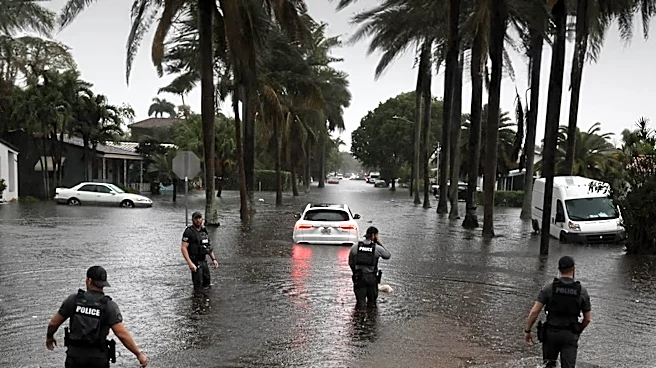
The Save the Chimps sanctuary in Fort Pierce, Florida, is facing significant operational challenges due to persistent floodwaters that have covered much of its 150-acre property for five days. The flooding, caused by heavy rain and an overflowing Header
Canal, has made it difficult for staff to access the sanctuary and care for over 200 rescued chimpanzees. While the chimpanzees are safe in care houses located at higher elevations on their islands, staff mobility is severely restricted. The sanctuary is currently relying on tractors, trailers, and large off-road vehicles for access, with a donated swamp buggy recently breaking down. Golf carts used for transporting food and supplies are also out of service, and a staff member's truck became stuck in a sinkhole. In one instance, food was delivered to a chimp by drone.
Why It's Important?
This situation highlights the vulnerability of animal sanctuaries and other critical facilities to extreme weather events, which are becoming more frequent and intense. The reliance on unconventional methods like drones for food delivery underscores the innovative, yet challenging, measures organizations must take to ensure animal welfare during crises. For the Save the Chimps sanctuary, a facility dedicated to chimpanzees rescued from research laboratories, entertainment, and the exotic pet trade, maintaining consistent care is paramount. The ongoing flooding not only disrupts daily operations but also poses a long-term threat to the sanctuary's infrastructure and financial stability, potentially impacting its ability to provide a safe haven for these animals.
What's Next?
Save the Chimps Facilities Director Mark Yohannan is scheduled to address the emergency at a North St. Lucie River Water District meeting on Monday, November 9, at 10 a.m. This meeting will likely focus on solutions to manage the floodwaters and prevent future occurrences, potentially involving discussions about canal management and regional water control strategies. The sanctuary will continue to adapt its operations to the flood conditions, seeking alternative transportation and supply methods. Long-term, the incident may prompt a review of the sanctuary's flood preparedness and infrastructure to enhance resilience against future environmental challenges, potentially requiring significant investment and community support.
Beyond the Headlines
The plight of the Save the Chimps sanctuary brings to light broader issues concerning climate change and its impact on vulnerable populations, including captive animals. As weather patterns become more unpredictable, facilities like this, which often operate on limited budgets, face increasing pressure to adapt and protect their residents. This event also underscores the ethical responsibility of human society to care for animals that have been impacted by human activities, such as those rescued from research or entertainment. The use of drones, while a temporary solution, points to a future where technology may play a larger role in disaster response for animal welfare, but also emphasizes the need for robust, sustainable infrastructure to withstand environmental shifts.