


What's Happening?
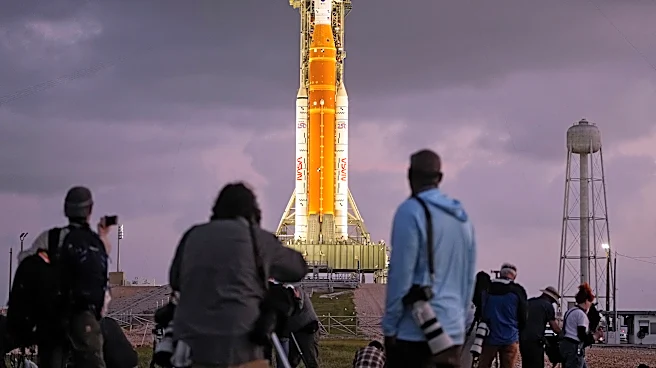
NASA's Artemis 2 mission, which launched on April 1 from Kennedy Space Center in Florida, is a significant milestone in space exploration as it sends four astronauts on a 10-day mission around the moon. This mission marks the first crewed venture beyond
low Earth orbit since the Apollo 17 mission in 1972. The crew, consisting of NASA astronauts Reid Wiseman, Victor Glover, Christina Koch, and Jeremy Hansen from the Canadian Space Agency, are making history with several firsts. Glover is the first African-American to leave low Earth orbit, while Koch and Hansen are the first woman and non-American, respectively, to do so. To engage the public and provide real-time updates, NASA has launched the Artemis Real-time Orbit Website (AROW), which allows users to track the Orion capsule's journey, including its distance from Earth and the moon, mission duration, and more. The AROW platform also offers background information on the moon and Apollo landing sites, accessible via NASA's website and app.
Why It's Important?
The Artemis 2 mission is a pivotal step in NASA's broader Artemis program, which aims to establish a sustainable human presence on the moon and eventually pave the way for human exploration of Mars. By enabling real-time tracking of the mission, NASA is enhancing public engagement and transparency, allowing people worldwide to follow the astronauts' journey closely. This mission not only rekindles interest in lunar exploration but also demonstrates international collaboration in space, as evidenced by the inclusion of Canadian astronaut Jeremy Hansen. The technological advancements and data collected during this mission will contribute to future space exploration efforts, potentially leading to new scientific discoveries and innovations. The mission's success could also inspire a new generation of scientists, engineers, and explorers, reinforcing the importance of space exploration in addressing global challenges.
What's Next?
Following the Artemis 2 mission, NASA plans to continue its Artemis program with subsequent missions aimed at landing astronauts on the lunar surface. Artemis 3, scheduled for the coming years, intends to land the first woman and the next man on the moon, further advancing human exploration capabilities. The data and experience gained from Artemis 2 will inform these future missions, helping to refine technologies and strategies for sustainable lunar exploration. Additionally, the international partnerships demonstrated in Artemis 2 may expand, involving more countries in collaborative space exploration efforts. As NASA progresses with its Artemis program, the focus will also shift towards developing the infrastructure necessary for long-term human presence on the moon, including habitats, power systems, and resource utilization technologies.