What's Happening?
Ten years ago, Washington Post journalist Jason Rezaian was released from Iran's Evin prison, where he was held on false charges of espionage. Rezaian and his wife, Yeganeh, were arrested in Tehran, marking
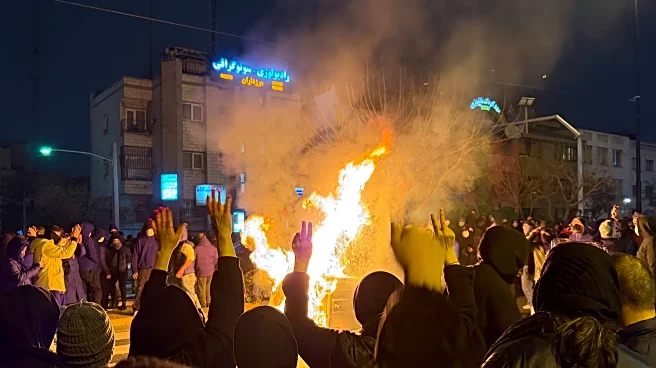
a significant moment in press freedom advocacy. Since his release, Rezaian has become a prominent advocate for press freedom and currently serves as the director of The Post's press freedom initiatives. Recently, Rezaian, along with his wife and ambassador Brett McGurk, participated in a discussion hosted by Elahe Izadi at The Washington Post. The conversation focused on their experiences, the current situation in Iran, including widespread protests, and the potential role of the United States in shaping Iran's future.
Why It's Important?
The wrongful imprisonment of Jason Rezaian highlights the ongoing challenges faced by journalists worldwide, particularly in regions with restrictive regimes. Rezaian's advocacy for press freedom underscores the importance of protecting journalists and ensuring their ability to report without fear of persecution. The discussion at The Washington Post serves as a reminder of the critical role of the media in holding governments accountable and promoting transparency. The current protests in Iran and the involvement of the United States in international diplomacy could have significant implications for press freedom and human rights in the region.
What's Next?
The future of press freedom in Iran remains uncertain, with ongoing protests and international scrutiny potentially influencing the country's policies. The United States may play a pivotal role in advocating for human rights and supporting press freedom initiatives. As Rezaian continues his work, there may be increased efforts to protect journalists globally and address the challenges they face in hostile environments. The evolving political landscape in Iran could lead to changes in how press freedom is perceived and implemented, both domestically and internationally.
Beyond the Headlines
Rezaian's experience sheds light on the broader issue of press freedom and the risks journalists face in authoritarian regimes. The ethical implications of his imprisonment raise questions about the responsibility of governments to protect journalists and uphold human rights. The cultural dimensions of press freedom in Iran, where media is often controlled by the state, highlight the need for international support and advocacy. Long-term shifts in global press freedom policies could be influenced by Rezaian's story and similar cases, emphasizing the importance of safeguarding journalistic integrity.