






What's Happening?
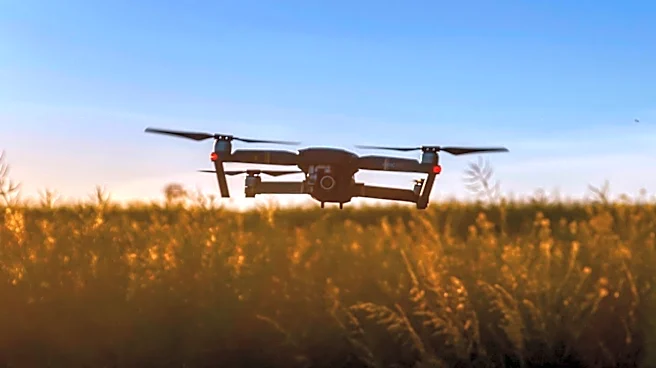
The Canadian government has initiated a program aimed at enhancing the country's domestic development, testing, and production of unmanned and autonomous systems. This initiative, known as the Defence Drone Initiative (DDI), is designed to support the Canadian Armed
Forces (CAF) and the Canadian Coast Guard (CCG). According to a statement from the Canadian Department of National Defence (DND), the DDI seeks to create a faster pathway for Canadian technologies to transition from concept to operational testing and, if they meet defense requirements, into production. The initiative is part of the broader Canadian Defence Industrial Strategy, which identifies unmanned and autonomous systems as a key sovereign capability. The DDI is led by the DND and the Defence Investment Agency (DIA) and aims to strengthen Canada's defense industrial base by providing the expertise, intellectual property, production capacity, and supply chains necessary to operate and scale critical capabilities.
Why It's Important?
The launch of the Defence Drone Initiative is significant as it represents a strategic move by Canada to bolster its defense capabilities and reduce dependency on foreign technologies. By focusing on developing a robust domestic drone ecosystem, Canada aims to enhance its ability to respond quickly to future operational requirements. This initiative is expected to provide the necessary expertise, testing capacity, and production capability to support the CAF and CCG effectively. Additionally, it aligns with Canada's goal of increasing supply chain resilience and ensuring that critical defense capabilities can be sustained and evolved domestically. The initiative could also stimulate innovation and growth within the Canadian defense industry, potentially leading to economic benefits and job creation.
What's Next?
As the Defence Drone Initiative progresses, the Canadian government will likely focus on identifying and supporting promising technologies that can be rapidly developed and deployed. This may involve collaborations with Canadian defense companies and research institutions to leverage existing expertise and resources. The initiative's success will depend on the ability to integrate these technologies into the operational frameworks of the CAF and CCG. Stakeholders, including defense contractors and technology developers, will be closely monitoring the initiative's developments to identify opportunities for participation and collaboration. The DDI's outcomes could also influence Canada's defense procurement strategies and policies in the coming years.