





What's Happening?
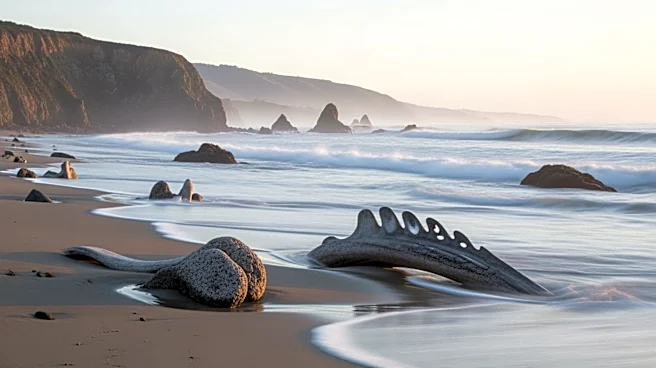
A significant increase in the number of dead gray whales washing up along the Pacific Northwest coast has been reported, with 16 strandings in Washington and several in Oregon this spring. Researchers attribute this alarming trend to a collapsing Arctic
food chain and deteriorating ocean conditions. The whales are arriving with depleted fat reserves, unable to sustain their long migration from Baja to the Arctic. This situation is part of a broader decline in the Eastern North Pacific gray whale population, which has seen numbers drop from approximately 27,000 to about 13,000 between 2019 and 2023. Although there were signs of stabilization in 2024, the current strandings have renewed concerns about the species' vulnerability. The National Oceanic and Atmospheric Administration (NOAA) and other researchers are investigating the impact of climate change on the whales' feeding grounds, linking recent die-offs to warming waters and disrupted ecosystems.
Why It's Important?
The increase in whale strandings highlights significant environmental challenges, particularly the impact of climate change on marine ecosystems. The gray whales' plight underscores the broader instability in the Arctic food chain, which is crucial for their survival. As sea ice diminishes due to rising temperatures, the entire food web, starting with algae that feed the whales' primary prey, is affected. This situation not only threatens the gray whale population but also serves as a stark indicator of the broader ecological shifts occurring in the Arctic. The strandings have prompted calls for immediate action to mitigate vessel strikes, protect feeding areas, and enhance response capabilities for entanglements. These measures are critical to support the recovery of the gray whale population and address the underlying environmental issues.
What's Next?
As the northbound migration continues through May, scientists anticipate more strandings. NOAA urges the public to report any sightings of dead or distressed marine mammals and to maintain a safe distance. The Washington Department of Fish & Wildlife has advised boaters to be vigilant for live gray whales in poor condition in Puget Sound. Long-term solutions require addressing the warming Arctic ecosystem, while short-term efforts focus on reducing vessel strikes and protecting feeding areas. Researchers emphasize the urgency of these actions to support the species' recovery.