
What's Happening?
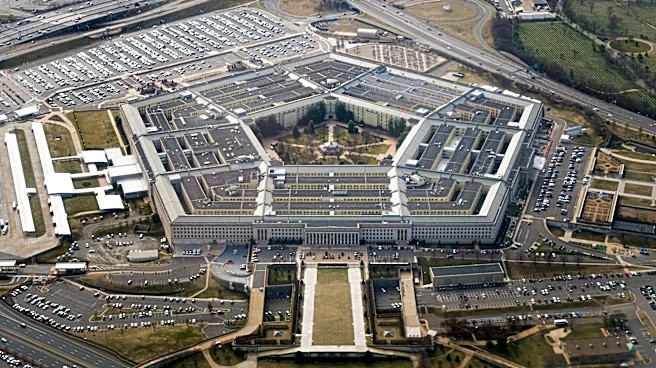
The Congressional Budget Office (CBO) and the Pentagon are in disagreement regarding the projected costs of President Trump's Golden Dome missile defense network. David Mosher, head of the CBO’s national
security division, defended the CBO's estimate of at least $1.2 billion over 20 years for the project. In contrast, Space Force Gen. Michael Guetlein, the program manager for Golden Dome, dismissed this figure as an uninformed 'myth,' stating that the Pentagon projects a more modest price tag of $185 billion over the next decade. Mosher indicated that the CBO's estimate relies on publicly available data and past research, as the Golden Dome program office has not met with them to discuss progress. The CBO's figures are based on the network of systems outlined in President Trump's January 2025 executive order for an 'Iron Dome for America,' using current technology like Patriot missile batteries and Aegis Ashore, rather than the Pentagon's specific current plan. Guetlein stated that the CBO's estimates do not reflect what the Pentagon is actually building.
Why It's Important?
This dispute highlights a significant lack of transparency and communication between key government bodies regarding a high-priority national security project. The discrepancy in cost estimates, ranging from $1.2 billion to $185 billion, could lead to public confusion and undermine confidence in government spending oversight. The CBO's reliance on publicly available data due to a lack of direct engagement from the Golden Dome program office raises concerns about the accuracy of financial projections for critical defense initiatives. Furthermore, the project's substantial funding, with Congress already providing $22.5 billion, and potential additional billions, underscores the need for clear and consistent financial reporting. The differing cost figures could influence future congressional appropriations and public support for the Golden Dome project, which aims to protect the U.S. against missile and drone threats by integrating existing military sensors and weapons and deploying new space-based interceptors.
What's Next?
Congress is currently considering allocating billions more to the Golden Dome project through a new reconciliation bill. Senator John Hoeven (R-N.D.) stated that Golden Dome could receive an additional $400 million through the base budget for fiscal year 2027, with a possibility of $17 billion more if Republican lawmakers can pass another party-line spending bill without Democratic votes. The Pentagon plans to deliver homeland defense capabilities by the summer of 2028, having already obligated 90% of the initial $22.5 billion provided by Congress. The program office is actively investing in artificial intelligence and infrastructure resiliency, and has launched an unclassified portal for external ideas. The ongoing debate over cost estimates may influence future legislative decisions and public scrutiny of the project's funding and implementation.
Beyond the Headlines
The disagreement over the Golden Dome project's cost extends beyond mere budgetary figures, touching upon broader issues of inter-agency cooperation, transparency in defense spending, and the public's right to accurate information on large-scale government initiatives. The CBO's inability to obtain direct information from the program office suggests potential systemic challenges in oversight for complex defense programs. This situation could set a precedent for how future high-priority projects are evaluated and funded, potentially leading to increased calls for greater accountability and clearer communication from defense contractors and government agencies. The project's ambition to integrate diverse technologies, including artificial intelligence and space-based interceptors, also raises questions about the long-term strategic implications and the evolving nature of national defense in an era of advanced threats.