

What's Happening?
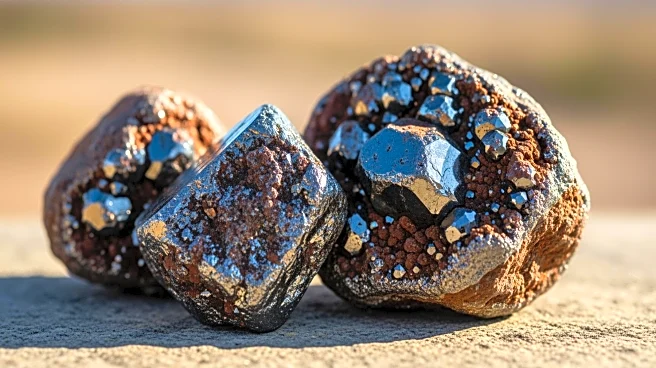
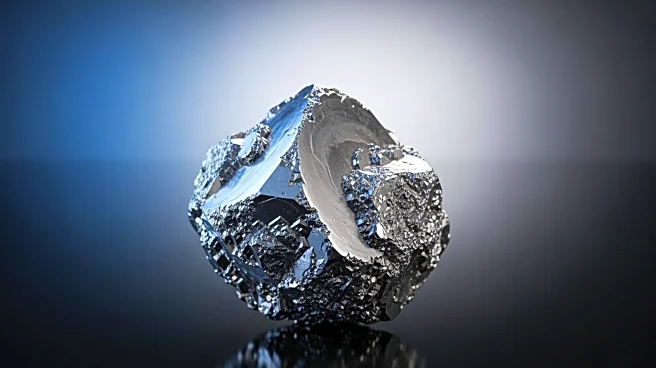
Kazakhstan has announced the discovery of a significant rare earth deposit in the Karagandy region, potentially positioning the country as a key player in the global tech supply chain. The deposit includes valuable minerals such as neodymium, cerium,
lanthanum, and yttrium, which are essential for manufacturing electric vehicles, wind turbines, and smartphones. Preliminary estimates suggest the deposit contains around 935,400 metric tons of rare earth oxides, with the total ore body possibly reaching up to 20 million tons. This discovery could challenge China's current dominance in the rare earth market, where it accounts for 70% of global output and 85% of refining. However, experts caution that further studies on hydrology, geomechanics, and economics are needed before full-scale mining can commence.
Why It's Important?
The discovery of this rare earth deposit in Kazakhstan could have significant implications for the global tech industry, which relies heavily on these minerals for various high-tech applications. By potentially reducing reliance on China for rare earth supplies, Kazakhstan could alter the dynamics of global supply chains, providing more stability and competition in the market. This development is particularly crucial as countries seek to secure their supply chains for critical materials amid geopolitical tensions. Additionally, the economic impact on Kazakhstan could be substantial, attracting foreign investment and boosting the country's strategic importance in the global economy.
What's Next?
While the discovery is promising, large-scale extraction is not expected to begin until 2031, as further environmental and commercial studies are required. Kazakhstan will need to develop domestic refining capabilities or establish partnerships with foreign companies to process the rare earths. The state mining company, Tau-Ken Samruk, is reportedly collaborating with Canada's Ivanhoe Mines to conduct technical studies. The involvement of international firms like Rio Tinto and South Korea's KIGAM indicates growing interest in Kazakhstan's potential as a rare earth supplier. The next steps will involve securing necessary licenses and refining plans, with ongoing studies expected to continue into 2026.