







What's Happening?
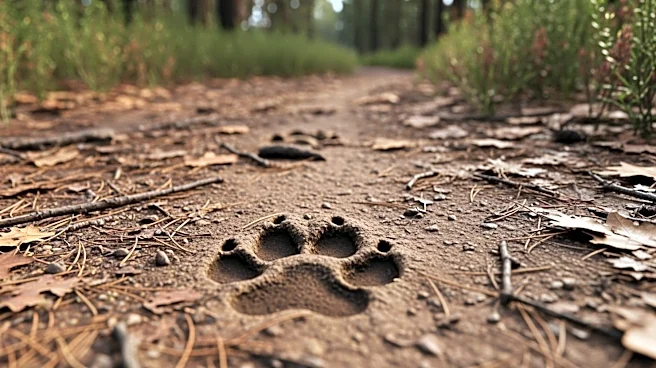
In a significant wildlife discovery, trail camera footage in northern Minnesota has captured the first verifiable evidence of cougar reproduction in the state in over 100 years. The footage, obtained by the Voyageurs Wolf Project, shows cougar kittens
near a deer carcass south of Voyageurs National Park. This discovery was unexpected, as researchers initially set up the camera to study deer predation by large cats. The presence of cougar kittens suggests the potential for a self-sustaining cougar population in Minnesota, a state where cougars have been rare and typically transient, migrating from neighboring states like the Dakotas and Nebraska.
Why It's Important?
The discovery of cougar reproduction in Minnesota is significant for wildlife conservation and management in the state. It indicates the possibility of establishing a resident cougar population, which could impact local ecosystems, particularly in terms of predator-prey dynamics. The presence of cougars could lead to increased competition with other predators, such as wolves, for resources like deer. This development also highlights the importance of monitoring and managing wildlife populations to ensure ecological balance and address potential human-wildlife conflicts. The findings could influence future conservation strategies and policies in Minnesota.
What's Next?
The next steps involve continued monitoring and research to understand the dynamics of cougar populations in Minnesota. Wildlife researchers will likely focus on studying the interactions between cougars and other predators, as well as their impact on prey populations. The Minnesota Department of Natural Resources may also consider developing management plans to address potential human-cougar interactions, as sightings could become more frequent. Public education on how to safely coexist with cougars will be crucial to prevent conflicts and ensure the safety of both humans and wildlife.