






What's Happening?
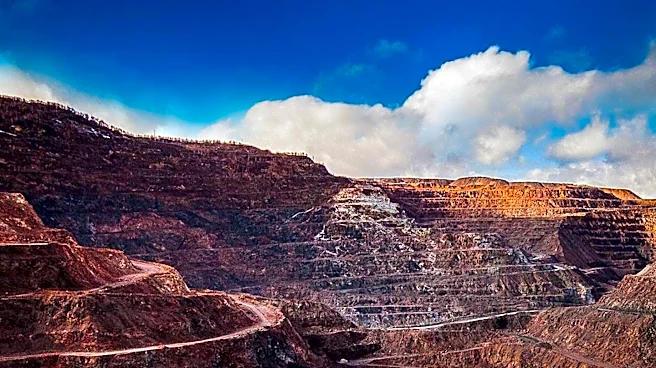
The Guadalupe Mountains in West Texas, once a vast tropical barrier reef during the Permian Period, offer a glimpse into ancient marine ecosystems. This fossilized reef, formed around 270 million years ago, thrived in a shallow inland sea on the supercontinent
Pangea. The reef's demise coincided with a mass extinction event at the end of the Guadalupian Epoch, likely triggered by volcanic activity in present-day China. The eruptions released greenhouse gases, causing climate changes that led to the extinction of many species, including the reef's builders. The Guadalupe Mountains now serve as a geological window into this pivotal moment in Earth's history.
Why It's Important?
The study of the Guadalupe Mountains provides valuable insights into the causes and consequences of mass extinction events. Understanding the impact of volcanic activity on ancient climates and ecosystems can inform current discussions on climate change and biodiversity loss. The fossilized reef highlights the resilience and adaptability of life, as well as the potential for catastrophic events to reshape the biosphere. This research underscores the importance of preserving geological sites that offer clues to Earth's past, helping scientists predict future ecological shifts and develop strategies for conservation.