








What's Happening?
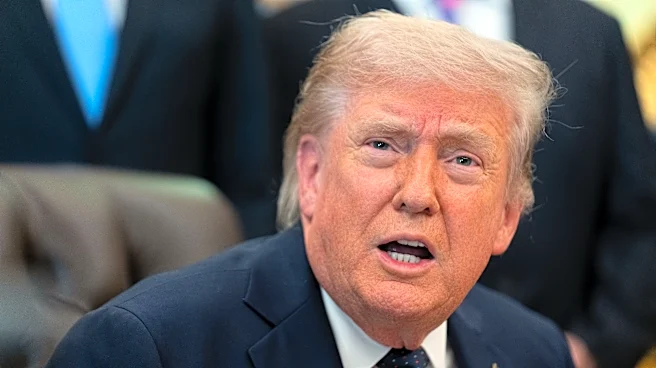
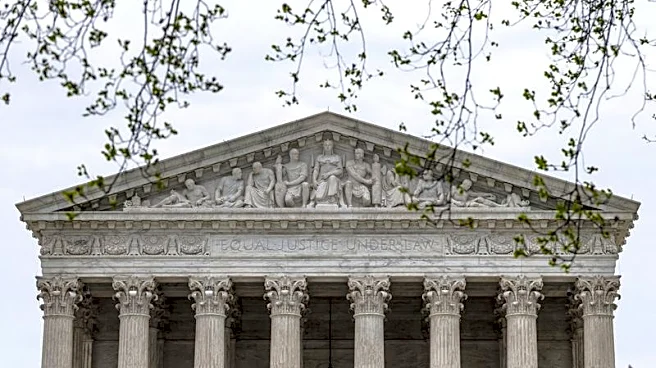
A federal appeals court has ruled that President Donald Trump lacked the authority to suspend asylum access for migrants at the U.S. southern border. The decision, made by a three-judge panel from the U.S. Court of Appeals for the District of Columbia,
found that the president's actions were not supported by the Immigration and Nationality Act, which allows migrants to apply for asylum once they enter the U.S. The court's ruling upholds a lower court's decision and challenges a key component of Trump's immigration policy. The ruling emphasizes that the president cannot unilaterally alter federal immigration laws to restrict asylum claims.
Why It's Important?
This ruling represents a significant setback for President Trump's immigration agenda, which has focused on tightening border controls and limiting asylum claims. The decision reinforces the legal framework that protects the rights of migrants to seek asylum in the U.S., potentially impacting thousands of individuals who have been affected by the asylum ban. The ruling may also influence future immigration policies and the balance of power between the executive branch and federal immigration laws. It highlights the judiciary's role in checking executive actions that may overstep legal boundaries.
What's Next?
The Trump administration is expected to appeal the decision, potentially bringing the case before the Supreme Court. The outcome of this legal battle could set a precedent for how asylum laws are interpreted and enforced in the future. Meanwhile, the current freeze on asylum applications at the southern border remains in effect, pending further legal developments. Stakeholders, including immigration advocates and policymakers, will be closely monitoring the situation as it unfolds, with potential implications for U.S. immigration policy and international human rights standards.