
What's Happening?
A groundbreaking fossil discovery in Yunnan Province, China, has pushed back the timeline for the emergence of complex animal life on Earth. Researchers from Oxford University and Yunnan University have
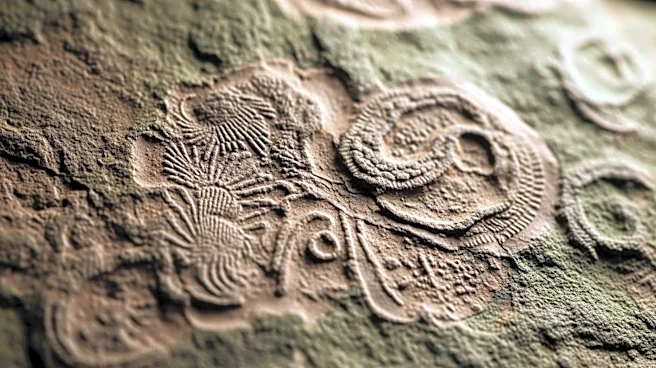
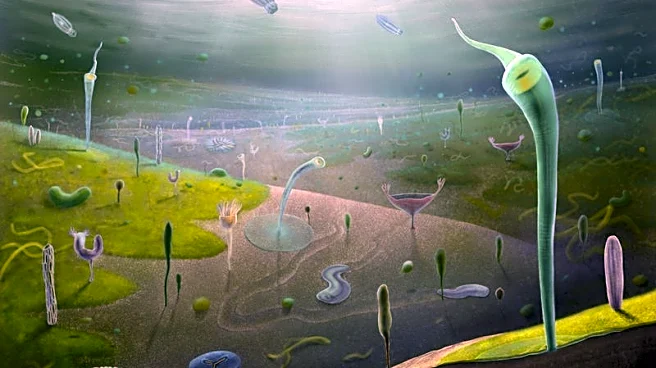
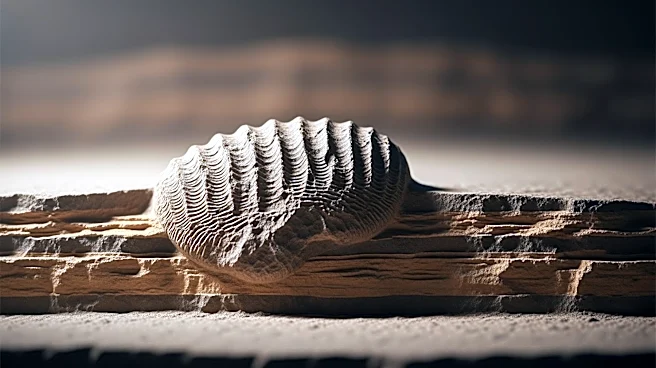
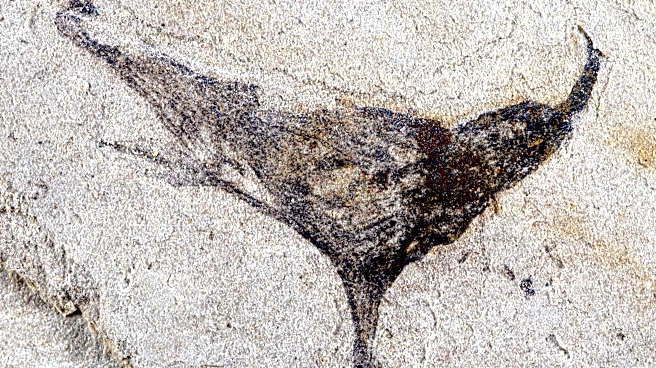
uncovered over 700 fossil specimens from the Jiangchuan Biota, dating back 554 to 539 million years. These fossils include the oldest known relatives of deuterostomes, a group that encompasses vertebrates like humans and fish. This finding suggests that complex animals evolved during the Ediacaran Period, predating the Cambrian explosion by at least four million years. The fossils reveal a diverse community of organisms, including ancestors of modern starfish and acorn worms.
Why It's Important?
This discovery challenges the long-held belief that the Cambrian explosion marked the beginning of complex animal life. By demonstrating that many animal groups existed earlier, it reshapes our understanding of evolutionary history. The presence of deuterostomes in the Ediacaran Period suggests that vertebrates and other complex animals have a deeper evolutionary history than previously thought. This could lead to a reevaluation of evolutionary timelines and the processes that drove the diversification of life on Earth. The findings also highlight the importance of fossil preservation in understanding ancient ecosystems.
Beyond the Headlines
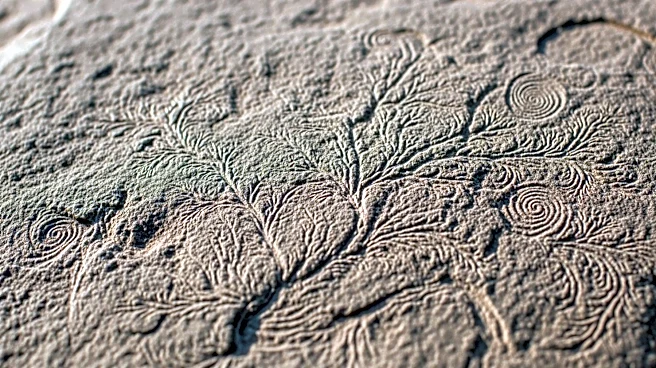
The exceptional preservation of these fossils as carbonaceous films, similar to those found in the Burgess Shale, provides detailed insights into the anatomy and lifestyle of early animals. This mode of preservation is rare, suggesting that similar communities may have existed elsewhere but were not preserved. The discovery also raises questions about the environmental conditions that allowed for such diversity and complexity in the Ediacaran Period. It underscores the need for continued exploration and study of ancient fossil sites to uncover more about the origins of life on Earth.