

What's Happening?
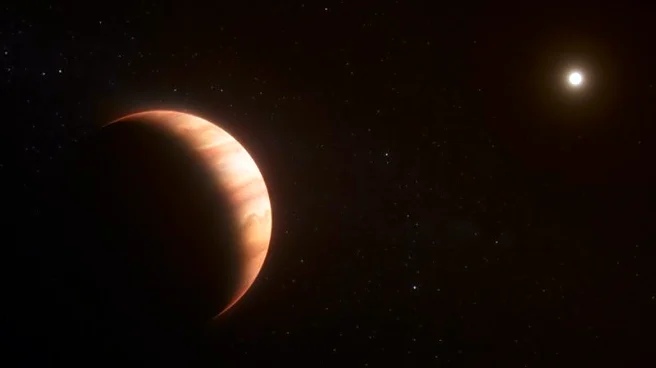
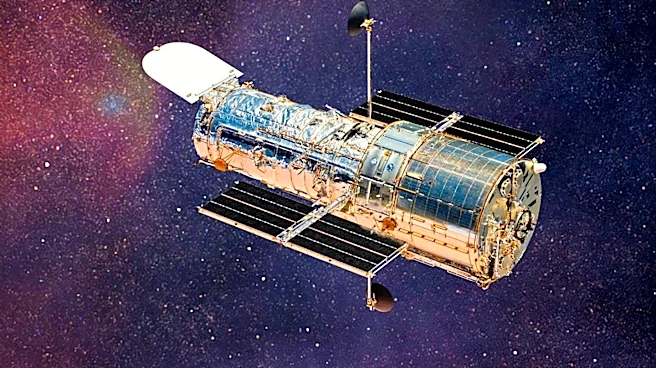
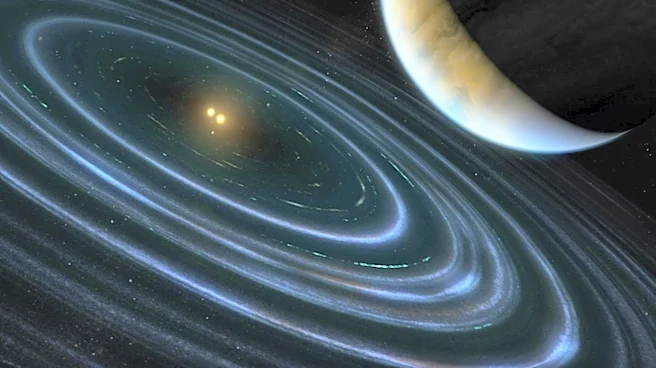
NASA's Hubble Space Telescope, in conjunction with the Transiting Exoplanet Survey Satellite (TESS) mission, has provided observations supporting the theory that planets can form from the remnants of dead stars. This discovery centers on a planet candidate
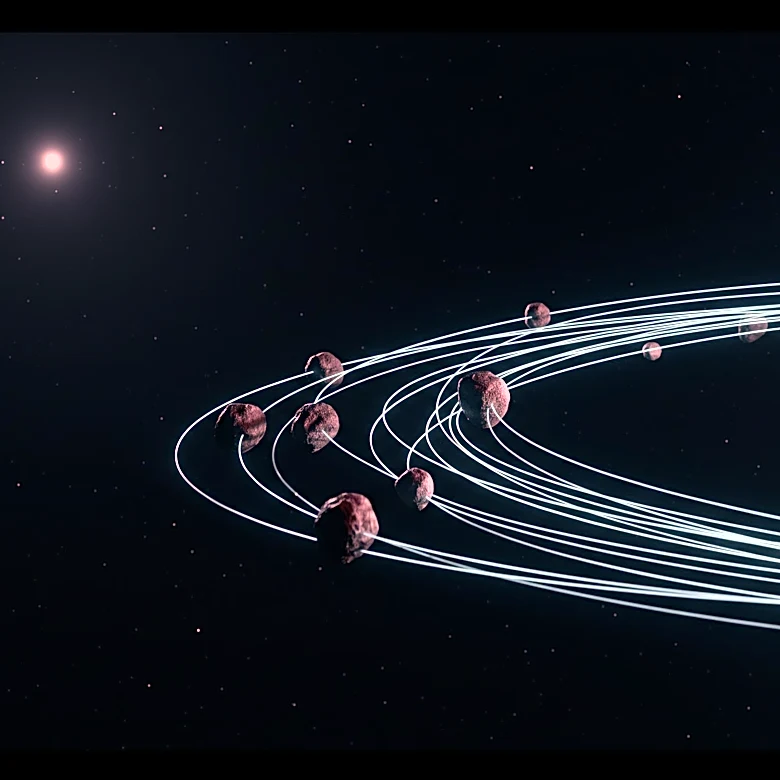
orbiting the white dwarf HS 0209+0832. Unlike typical planet formation from a young star's gas and dust disk, this potential 'second-generation' planet appears to have formed from material expelled by the dying star itself. Hubble detected unusually high concentrations of heavy elements, including zinc, copper, and niobium, in the white dwarf's atmosphere. Niobium levels were over 1,000 times greater than those found in the Sun. These elements are produced during a star's later life stages, suggesting the white dwarf is accreting material from a planet that formed from its own ejected matter. This indicates a cosmic rebirth where a new world is built from the foundations of an old one.
Why It's Important?
This finding significantly broadens the understanding of planetary formation, suggesting that the process is not limited to the early stages of a star's life. The possibility of planets forming from the ashes of dead stars opens new avenues for exoplanet research and could lead to the discovery of entirely new classes of planetary systems. It challenges existing models of planet formation and implies that the universe might harbor more planets than previously thought, even in environments considered hostile to life. The detection of specific heavy elements in the white dwarf's atmosphere provides crucial evidence for this unique formation mechanism, offering astronomers a 'fingerprint' to identify similar systems in the future. This research also prompts questions about the potential for our own solar system to host a second-generation planet formed from the Sun's eventual demise.
What's Next?
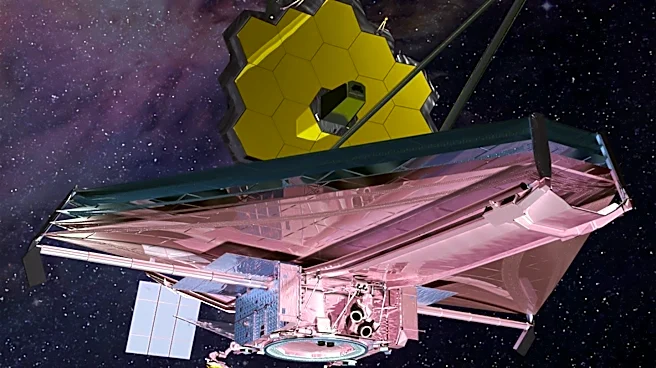
Further observations and detailed analyses will be crucial to confirm the nature of the planet candidate around HS 0209+0832 and to search for similar systems. Astronomers will likely use advanced telescopes, including the James Webb Space Telescope, to conduct spectroscopic studies of other white dwarfs and their surrounding environments. The goal will be to identify more instances of unusual elemental compositions that could indicate the presence of second-generation planets. This research could lead to the development of new theoretical models for planet formation under extreme conditions. Additionally, the study encourages a re-evaluation of exoplanet search strategies, potentially expanding the targets to include dead star systems, which were previously considered less likely to host planets.
Beyond the Headlines
The concept of planets forming from the remnants of dead stars introduces a profound perspective on cosmic recycling and the resilience of planetary formation processes. It suggests that the universe is far more dynamic and capable of regeneration than previously understood. This discovery could have long-term implications for astrobiology, as it expands the potential locations where life might arise, even if such planets are likely to be very different from Earth. The detection of specific heavy elements like niobium, zinc, and copper in such high concentrations also provides insights into the nucleosynthesis processes occurring within stars and how these elements are distributed throughout the cosmos. This 'phoenix' phenomenon of planetary birth from stellar death adds a poetic and scientifically significant layer to our understanding of the universe's life cycle.