
What's Happening?
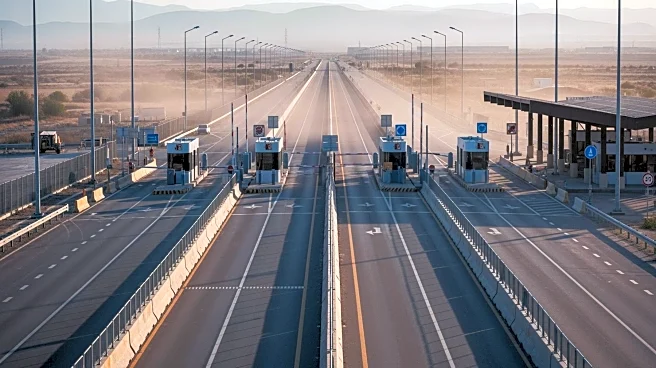
The Rafah border crossing between Gaza and Egypt has reopened, marking a significant step in the ceasefire agreement between Israel and Hamas. The reopening allows limited foot traffic, with only 50 Palestinians
expected to cross in each direction on the first day. This development is part of a broader ceasefire plan that includes the exchange of hostages, increased humanitarian aid, and a partial withdrawal of Israeli troops. Despite the reopening, violence continues in Gaza, with reports of a 3-year-old Palestinian boy killed by Israeli naval fire. The crossing, previously seized by Israeli troops in 2024, is now under the supervision of European Union border patrol agents, with Israel and Egypt vetting individuals for entry and exit.
Why It's Important?
The reopening of the Rafah crossing is a critical component of the ceasefire agreement, potentially easing the humanitarian crisis in Gaza by allowing medical evacuations and the return of displaced Palestinians. Approximately 20,000 Palestinians in need of medical care hope to leave Gaza, while thousands outside the territory wish to return home. The crossing's operation is a test of the ceasefire's viability and could influence future negotiations and stability in the region. The limited reopening reflects ongoing tensions and the complex dynamics between Israel, Hamas, and Egypt, with significant implications for regional security and humanitarian conditions.
What's Next?
If the ceasefire holds, the Rafah crossing is expected to increase its operations, facilitating more movement of people and potentially goods. The second phase of the ceasefire agreement involves establishing a new Palestinian governance committee for Gaza, deploying an international security force, and disarming Hamas. These steps aim to stabilize the region and begin reconstruction efforts. However, the success of these initiatives depends on continued cooperation between the involved parties and the maintenance of peace. The international community will likely monitor the situation closely, with potential diplomatic interventions if the ceasefire falters.