



What's Happening?
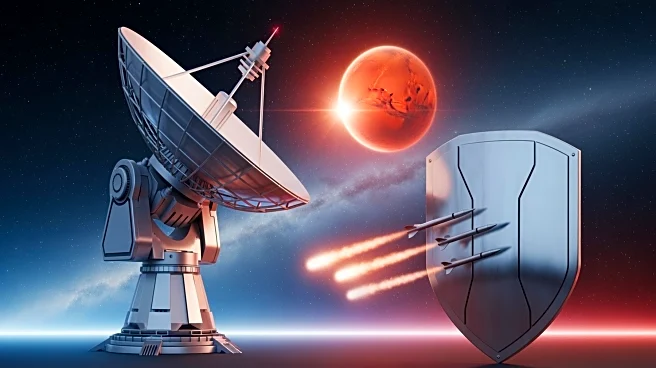
In 2025, U.S. space policy has been marked by significant developments, including President Trump's push for a crewed Mars landing and the establishment of a space-based missile defense program. The administration's dual focus on lunar and Martian exploration
has been emphasized, with NASA pursuing parallel paths to both celestial bodies. The year also saw the nomination and re-nomination of Jared Isaacman to lead NASA, reflecting the administration's commitment to advancing space exploration. Additionally, the Pentagon's missile defense initiative has gained traction, positioning the U.S. as a leader in space-based defense capabilities.
Why It's Important?
The U.S. space policy developments in 2025 highlight the country's strategic priorities in space exploration and defense. The focus on Mars and the Moon underscores the U.S.'s ambition to maintain its leadership in space exploration, while the missile defense program enhances national security. These initiatives have significant implications for the U.S. space industry, driving innovation and investment in space technologies. The policy direction also reflects broader geopolitical considerations, as the U.S. seeks to counter China's growing influence in space and secure its position in the global space race.
What's Next?
As the U.S. continues to advance its space policy, key developments are expected in the implementation of the Mars and Moon exploration programs. The confirmation of Jared Isaacman as NASA's leader will likely influence the agency's strategic direction and priorities. The space-based missile defense program will continue to evolve, with potential implications for U.S. defense policy and international relations. The U.S. space industry is poised to benefit from increased government support and investment, fostering further innovation and collaboration with international partners.