




What's Happening?
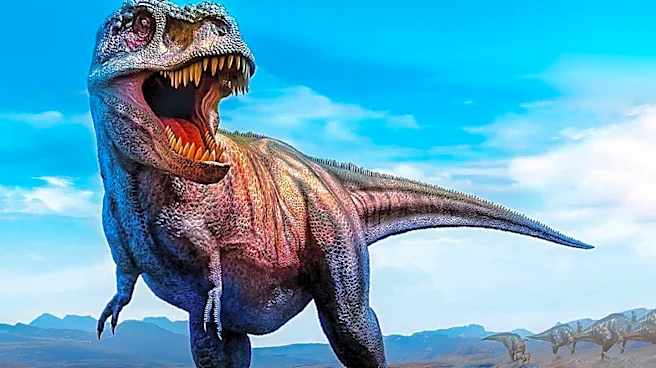
Recent biomechanical studies have revealed that the Tyrannosaurus rex, a gigantic carnivorous dinosaur, possessed the most powerful bite force among terrestrial animals, estimated at up to 57,000 newtons. This force is more than three times that of a saltwater
crocodile, which is known for its strong bite. The T. rex, which lived approximately 66 million years ago, stood 4 meters tall, weighed twice as much as an elephant, and had teeth that were 30 centimeters long. It required 140 kilograms of meat per day to sustain itself, making it one of the fiercest predators of its time. The findings are based on a well-preserved fossil record, including numerous skulls, which provide a clearer picture of the dinosaur's formidable biting capabilities.
Why It's Important?
Understanding the bite force of the Tyrannosaurus rex offers significant insights into the predatory behaviors and ecological role of this iconic dinosaur. The T. rex's powerful bite would have allowed it to crush bones and consume large prey, influencing the dynamics of its ecosystem. This research not only enhances our knowledge of prehistoric life but also contributes to the field of paleontology by providing a benchmark for comparing the bite forces of other extinct and living species. The study underscores the importance of fossil records in reconstructing the life and capabilities of ancient creatures, offering a glimpse into the evolutionary history of predation.