







What's Happening?
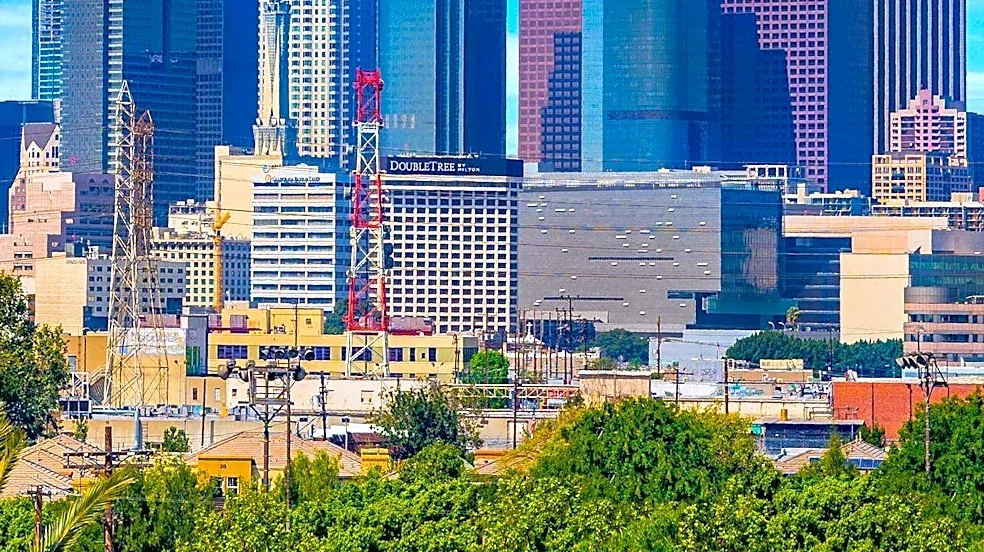
A letter to the editor in the Los Angeles Times advocates for Los Angeles to overcome its 'low-rise mentality' and construct taller apartment buildings to combat the city's housing crisis. The author, Doug Jones of Los Feliz, recently returned from a six-week
trip to Vancouver, Tokyo, Seoul, Shanghai, and Hong Kong, noting that these cities have addressed their housing shortages by building numerous 30-50-story residential towers. Jones suggests that Los Angeles, facing similar land scarcity, should follow this model, particularly along Wilshire Boulevard from downtown to the ocean, envisioning it filled with 30-40-story apartment buildings. He emphasizes the need to incentivize developers to ensure these taller buildings remain affordable.
Why It's Important?
This perspective highlights a critical debate in urban planning and housing policy in Los Angeles and other dense U.S. cities. The call for taller buildings directly challenges traditional zoning preferences for lower-density development, which many argue exacerbates housing shortages and affordability issues. Embracing high-rise residential construction could significantly increase housing supply in a land-scarce city like Los Angeles, potentially easing market pressures and making housing more accessible. However, it also raises complex questions about urban aesthetics, infrastructure capacity, community character, and the potential for gentrification if affordability is not explicitly addressed through incentives or regulations. The comparison to Asian cities underscores a different approach to urban density that could offer solutions to the U.S. housing crisis.
What's Next?
While a letter to the editor represents public opinion rather than policy, it contributes to an ongoing conversation about Los Angeles's housing future. The city continues to grapple with severe housing shortages and affordability challenges, prompting various proposals for increasing density and streamlining development. Future discussions and policy decisions by city planners and elected officials will likely continue to weigh the benefits of increased density, including taller buildings, against community concerns and the need for equitable development. The challenge will be to find effective ways to incentivize developers to build affordable units within these taller structures, ensuring that increased supply benefits a broad spectrum of residents.
Beyond the Headlines
The debate over building taller in Los Angeles touches on deeper cultural and historical aspects of urban development in the U.S. Many American cities have historically favored suburban-style, low-density development, often influenced by a desire for single-family homes and open spaces. Shifting to a high-rise model represents a significant paradigm change that could alter the city's skyline, traffic patterns, and social dynamics. It also brings to the forefront the tension between preserving a city's perceived character and adapting to modern demographic and economic pressures. The success of such a shift would depend not only on zoning changes but also on comprehensive urban planning that addresses public transit, green spaces, and community services to support a denser population, ensuring that increased verticality leads to a more livable, rather than just a more crowded, city.