
What's Happening?
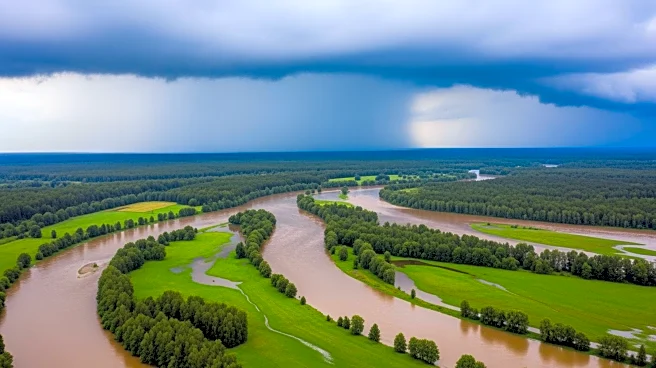
Residents in western Washington are bracing for severe flooding as a new wave of heavy rain hits the region, following a storm that caused significant disruptions. The atmospheric river is expected to push
rivers to record levels, particularly affecting the Skagit River in the agricultural valley north of Seattle. Authorities in Mount Vernon have warned residents to prepare for evacuation, with sandbag-filling stations set up to mitigate flood damage. The town of Orting has already seen evacuations due to the Puyallup River's high levels. Washington Governor Bob Ferguson has declared a statewide emergency, emphasizing the potential threat to lives. The Washington National Guard is mobilizing hundreds of members to assist affected communities. The Skagit River is forecasted to reach unprecedented heights, posing a significant risk to areas within its floodplain.
Why It's Important?
The flooding in Washington state underscores the increasing frequency and intensity of extreme weather events, likely exacerbated by climate change. The potential for record-breaking river levels poses a significant threat to infrastructure, agriculture, and residential areas, particularly in floodplains. The economic impact could be substantial, affecting local businesses and agriculture in the Skagit Valley, a key agricultural region. The state's emergency response and preparedness will be tested, highlighting the need for robust infrastructure and community resilience in the face of climate-related challenges. The situation also raises concerns about the adequacy of current flood defenses and the need for long-term planning to mitigate future risks.
What's Next?
As the region prepares for more rain, authorities are focused on immediate response efforts, including evacuations and flood mitigation. The Washington National Guard's deployment will be crucial in supporting local communities. Looking ahead, the state may need to reassess its flood management strategies and infrastructure investments to better handle such extreme weather events. The ongoing situation could prompt discussions on climate adaptation policies and funding for improved flood defenses. Residents and businesses in affected areas will need to remain vigilant and prepared for potential evacuations and disruptions.