
What's Happening?
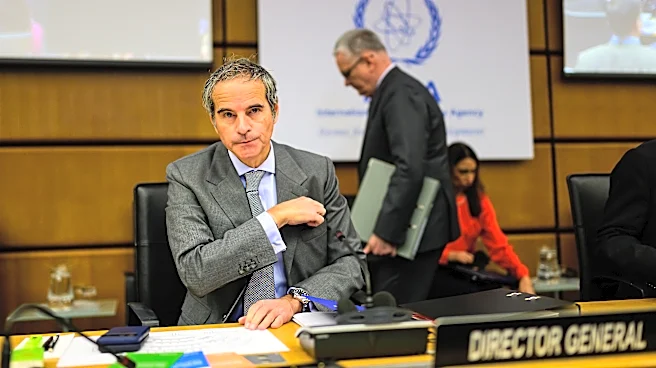
The UN's nuclear watchdog, the International Atomic Energy Agency (IAEA), has voiced 'increasing concern' regarding an uninspected nuclear facility in Iran. Iran had informed the IAEA of its plans to establish
a uranium enrichment plant in Isfahan a day before Israel initiated attacks on its nuclear sites last June, with the U.S. joining later that month. The IAEA's report indicates that the agency lacks information on the exact location of this facility or whether it contains nuclear material. Since the commencement of the recent conflict, Iran has restricted IAEA inspectors' access to its nuclear sites, thereby preventing the agency from verifying its enriched uranium stockpile. Under the 2015 nuclear deal, Iran had agreed to limit its enriched uranium stockpile to 300kg and enrichment to 3.67% purity, but it has since exceeded both limits. The nuclear complex at Isfahan reportedly suffered extensive damage from U.S. and Israeli strikes, particularly its above-ground sections, and the condition of its underground facilities remains unclear. The IAEA believes a significant portion of Iran's highly enriched uranium was stored there.
Why It's Important?
This development is critically important due to the serious proliferation concerns it raises. The IAEA's inability to inspect the Isfahan facility and verify Iran's enriched uranium stockpile means there is a significant gap in international oversight of Iran's nuclear program. This lack of transparency directly undermines the non-proliferation regime and increases the risk of Iran developing nuclear weapons, a goal it consistently denies, claiming its program is for peaceful civilian purposes. The fact that Iran has already exceeded the limits set by the 2015 nuclear deal, accumulating an estimated 441kg enriched to 60% (close to weapons grade) before the June 2025 strikes, further amplifies these concerns. The U.S. and Israel's stated reason for attacking Iran's nuclear sites was to prevent such development, yet the current situation suggests that objective is far from secured. The ongoing restrictions on inspections create an environment of distrust and heighten regional tensions, potentially leading to further military actions or a more aggressive stance from international powers.
What's Next?
The IAEA's latest appeal for access to Iran's nuclear facilities, particularly the uninspected site in Isfahan, indicates a continued push for transparency and verification. It is expected that the international community, including the U.S., will exert diplomatic pressure on Iran to grant inspectors full access. The U.S. has previously offered a $20 million reward for information about Iran's nuclear program, signaling its commitment to monitoring and addressing proliferation risks. However, Iran's insistence on restricting access, especially after the attacks, suggests a reluctance to comply without significant concessions or changes in the geopolitical landscape. The future could see intensified diplomatic efforts, potentially involving new proposals for inspections or sanctions relief, or conversely, an escalation of tensions if Iran continues to deny access. The condition of the damaged nuclear complex at Isfahan and the fate of the highly enriched uranium believed to be stored there will remain central to these discussions. The situation demands urgent rectification to prevent further proliferation concerns.
Beyond the Headlines
The 'increasing concern' expressed by the IAEA highlights a deeper challenge in international relations: the balance between national sovereignty and global security imperatives. Iran's restriction of access to its nuclear sites, while potentially a response to perceived aggression, directly conflicts with international efforts to prevent nuclear proliferation. This situation underscores the limitations of existing international agreements and the difficulties in enforcing them when geopolitical tensions are high. The lack of verifiable information about Iran's nuclear material could lead to a dangerous cycle of speculation, mistrust, and preemptive actions, potentially destabilizing the entire Middle East. Furthermore, it raises questions about the effectiveness of military strikes in achieving long-term non-proliferation goals, as they may inadvertently lead to greater secrecy and less international oversight. The ethical implications of a state pursuing a nuclear program under such opaque conditions, and the international community's responsibility to respond, are profound and far-reaching.