
What's Happening?
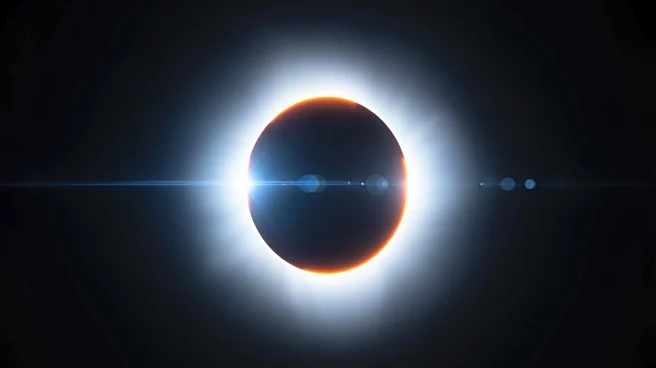
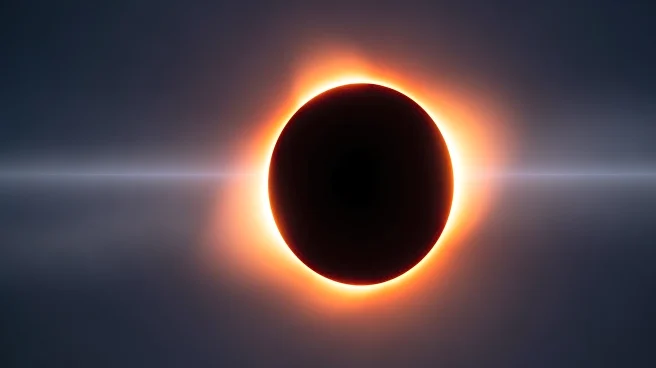
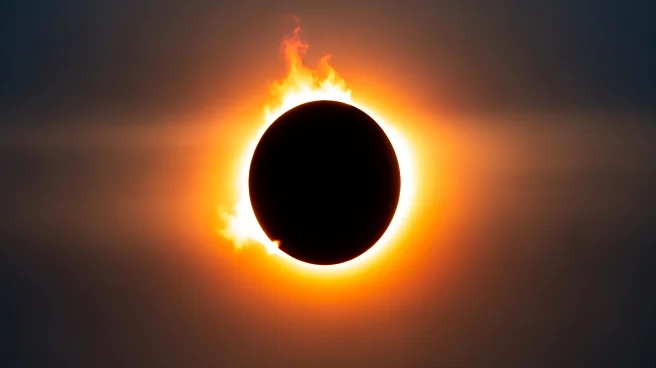
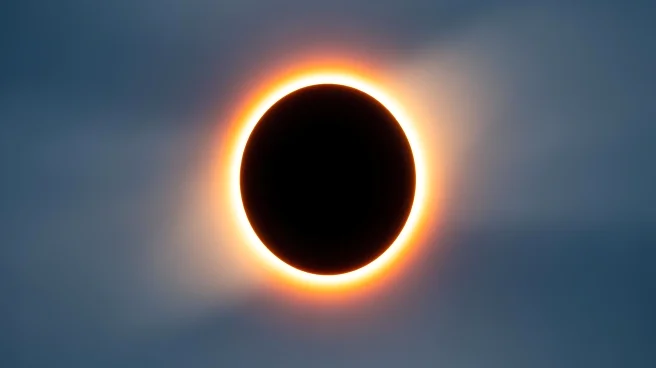
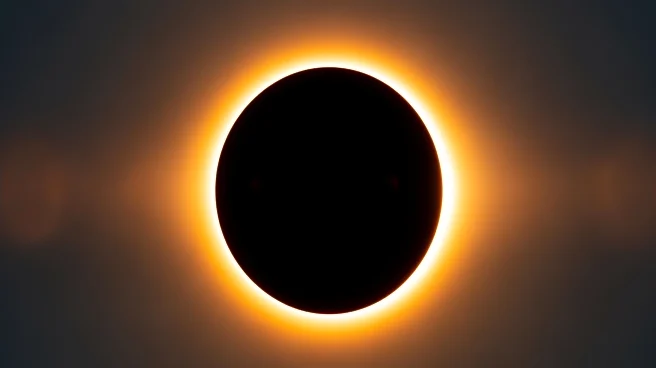
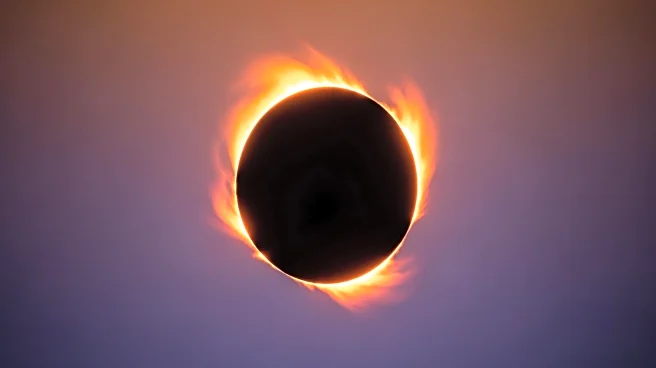
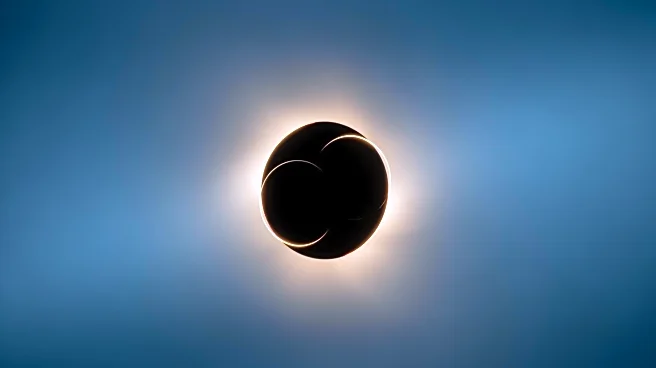
The first solar eclipse of 2026, known as the 'ring of fire,' is set to occur on February 17. This astronomical event happens when the Earth, Sun, and Moon align perfectly, with the Moon passing directly between the Sun and Earth. This alignment leaves
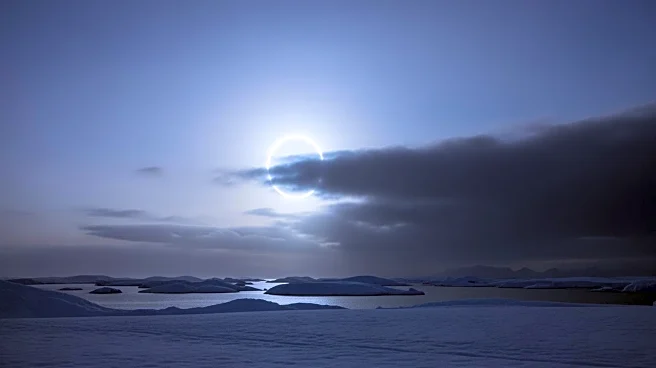
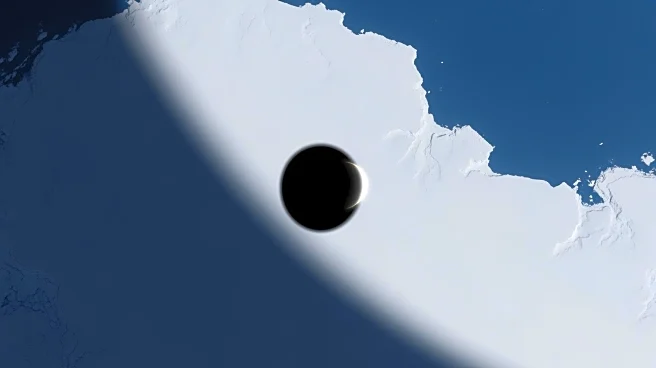
only the outer edge of the Sun visible, creating a glowing ring effect. The eclipse will be visible from specific locations, including parts of Antarctica and the Southern Ocean. However, it will not be visible from the UK or the United States. The event marks a significant highlight in the 2026 lunar calendar, drawing interest from astronomers and enthusiasts worldwide.
Why It's Important?
The 'ring of fire' solar eclipse is a rare and visually stunning event that captures the interest of both the scientific community and the general public. It provides an opportunity for astronomers to study the Sun's corona and other celestial phenomena. For enthusiasts, it offers a chance to witness a unique natural spectacle. The event also highlights the importance of geographic location in observing astronomical events, as visibility is limited to specific areas. This eclipse serves as a reminder of the intricate dynamics of our solar system and the ongoing fascination with celestial events.
What's Next?
Following the solar eclipse, a lunar eclipse is expected to occur on March 3-4, turning the Moon a reddish hue, commonly referred to as a 'Blood Moon.' This sequence of celestial events will continue to engage astronomers and the public, with various organizations likely to provide live streams and educational content. For those unable to view the solar eclipse directly, online platforms and virtual experiences will offer alternative ways to engage with the event. The anticipation and coverage of these events will contribute to a broader understanding and appreciation of astronomical phenomena.