



What's Happening?
An international team of biologists has proposed that the emergence of free-living cellular lineages on Earth may have occurred not once, but twice. This study, conducted by scientists from the Institute of Molecular Evolution at Heinrich Heine University
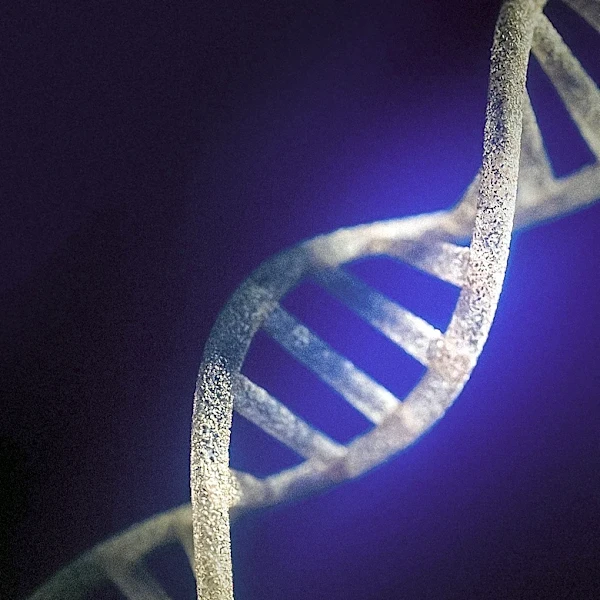
Düsseldorf, analyzed genomes, protein structures, and chemical reactions to reconstruct the earliest stages of metabolic development. Their findings, published in Science Advances, suggest that bacteria and archaea independently transitioned from hydrothermal-vent chemistry to free-living cells. The research indicates that the last universal common ancestor (LUCA) had enzymes for only half of its metabolic reactions, with the rest catalyzed by metals in its environment. As bacteria and archaea diverged, each lineage independently evolved its own enzymes to replace inorganic catalysts. The team identified at least five instances where both groups developed structurally different enzymes for the same metabolic reaction. This independent evolution of life pathways on Earth suggests that the emergence of life on other worlds might be more probable than previously assumed.
Why It's Important?
This research significantly impacts the field of astrobiology and the search for extraterrestrial life. If life on Earth originated through two separate pathways, it broadens the understanding of conditions under which life can emerge, making the existence of life on other planets and moons more likely. The study highlights hydrothermal systems as promising locations for searching for extraterrestrial life, as similar conditions may exist on icy moons like Enceladus and Europa, where oceans interact with rock. The findings also suggest that the range of biomarkers considered when observing exoplanets should be expanded. By demonstrating that metabolism could gain independence from the environment multiple times, the study challenges previous models that might have underestimated the probability of life arising elsewhere in the universe. This shift in perspective could influence future space missions and research priorities aimed at detecting life beyond Earth.
What's Next?
The implications of this study will likely lead to a re-evaluation of astrobiological research strategies. Scientists may intensify their focus on exploring hydrothermal systems on celestial bodies within our solar system and beyond, such as the subsurface oceans of Europa and Enceladus. Future missions could be designed to specifically look for biomarkers associated with the independent metabolic pathways identified in this research. Additionally, the findings could prompt a broader consideration of potential environments and chemical conditions that could support life, moving beyond Earth-centric assumptions. The research also opens avenues for further investigation into the early evolution of life on Earth, potentially leading to a more comprehensive understanding of how complex biological systems arose from simpler chemical processes. This could involve more detailed genomic and proteomic analyses of extremophiles and ancient microbial lineages.
Beyond the Headlines
The concept of life originating twice on Earth carries profound philosophical and scientific implications. It challenges the notion that life's emergence is an exceedingly rare event, suggesting instead that it might be a more common cosmic phenomenon given suitable conditions. This perspective could fundamentally alter humanity's view of its place in the universe, moving from a potentially unique existence to one among many. Ethically, if life is more common, it could influence how humanity approaches space exploration and potential contact with extraterrestrial organisms, emphasizing preservation and careful study. Culturally, such a discovery could inspire new narratives and artistic expressions about life's diversity and resilience. Scientifically, it underscores the importance of interdisciplinary research, combining biology, chemistry, and astronomy to unravel the mysteries of life's origins and distribution across the cosmos. The study also highlights the adaptability of early life forms, suggesting that life can find multiple ways to thrive even in challenging environments.