





What's Happening?
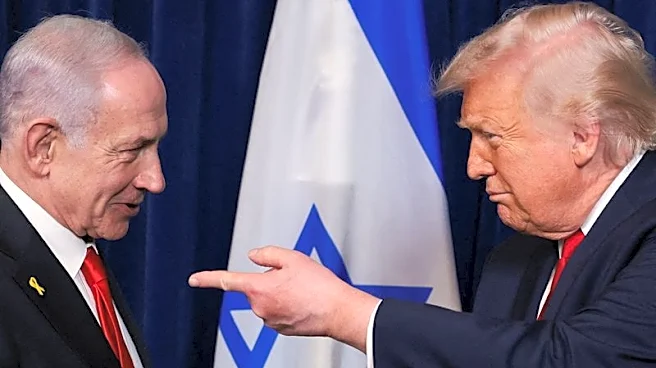
Amid ongoing negotiations, public skepticism in Iran is rising regarding a potential peace deal with the United States. President Trump announced that a deal involving the US, Iran, and several regional countries is close to finalization, aiming to reopen
the Strait of Hormuz. However, Iranian public opinion remains pessimistic, with a significant portion believing that no agreement will be reached and conflict will resume. The negotiations involve complex issues such as Iran's nuclear program and sanctions relief, with regional leaders urging for a peaceful resolution.
Why It's Important?
The potential US-Iran deal is crucial as it could significantly impact regional stability and global oil markets. The reopening of the Strait of Hormuz is particularly important for international trade, as it is a critical chokepoint for oil transportation. A successful agreement could ease tensions and reduce the risk of military conflict, benefiting global economic stability. However, the skepticism and distrust among the Iranian public and political circles highlight the challenges in achieving a lasting peace, as deep-seated issues and historical grievances continue to influence negotiations.
What's Next?
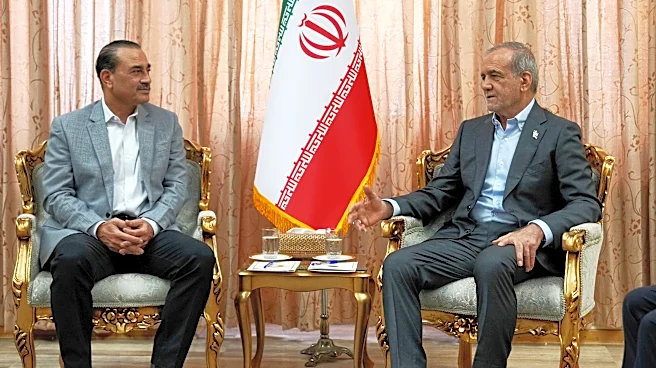
The next steps involve finalizing the details of the agreement, with both sides needing to address contentious issues such as nuclear enrichment and sanctions. The outcome of these negotiations will depend on the willingness of both parties to compromise and the influence of regional stakeholders. Continued diplomatic efforts and mediation by countries like Pakistan may play a crucial role in reaching a consensus. The international community will be closely monitoring the situation, as the implications of the deal extend beyond the immediate region.