




What's Happening?
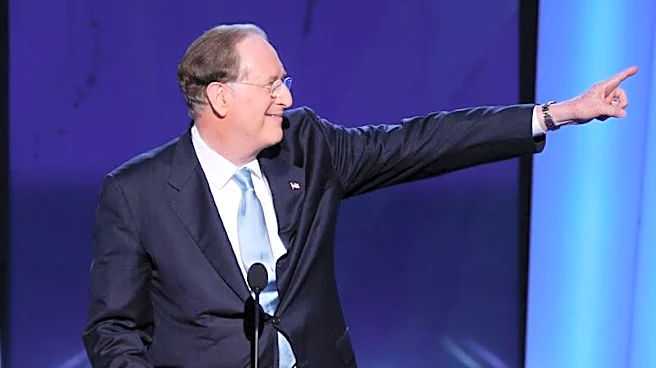
Jay Rockefeller, a former U.S. Senator and Governor of West Virginia, has died at the age of 89. Rockefeller, the last Democratic member of his prominent political family, passed away on Thursday night at his Washington D.C. home, as confirmed by Mary
Stewart, vice president for external affairs at WETA. He dedicated half a century to public service in West Virginia, a state he moved to in 1964 to work in an anti-poverty program. Rockefeller was elected governor 12 years later, serving two terms, and subsequently spent 30 years as a U.S. Senator. Born John D. Rockefeller IV in New York City, he was the great-grandson of Standard Oil Co. founder John Rockefeller. Despite his family's Republican tradition, Rockefeller became a Democrat and was first elected to the state House of Delegates in 1966. His career included overcoming a political defeat in the 1972 gubernatorial race against Arch A. Moore Jr., whose daughter, Shelley Moore Capito, later succeeded Rockefeller in the Senate upon his retirement in 2014.
Why It's Important?
The passing of Jay Rockefeller signifies the end of a significant political era, particularly for West Virginia and the Rockefeller family dynasty. His decision to move to West Virginia and dedicate his career to public service in one of the nation's poorest states, despite his immense inherited wealth, highlights a unique commitment to community and policy. Rockefeller's political journey, from a state legislator to governor and then a long-serving U.S. Senator, shaped West Virginia's infrastructure and social programs. His emphasis on developing roads, sewers, and bridges, though not 'sexy,' as he put it, was crucial for the state's progress. His career also demonstrates the evolving political landscape, as he broke from his family's Republican roots to become a prominent Democrat. His legacy includes efforts to strengthen healthcare, protect coal miners, and support veterans, leaving a lasting impact on generations of West Virginians.
What's Next?
While Jay Rockefeller's immediate political impact concluded with his retirement in 2015, his death prompts reflection on his enduring legacy in West Virginia and national politics. His contributions to infrastructure development, healthcare, and support for coal miners and veterans will likely be revisited and honored. Current West Virginia Governor Patrick Morrisey has already acknowledged Rockefeller's role in shaping the state, indicating that his public service will continue to be recognized. The political seat he once held is now occupied by Republican Shelley Moore Capito, whose father was a political rival of Rockefeller's. This transition underscores the shift in West Virginia's political alignment over the decades. Future discussions about West Virginia's development and social welfare policies will undoubtedly draw upon the foundations laid during Rockefeller's extensive tenure.
Beyond the Headlines
Jay Rockefeller's career offers a compelling study in political identity and public service, particularly his departure from his family's Republican tradition to become a Democrat. His move to West Virginia as a young man to participate in an anti-poverty program was a transformative experience that, according to him, 'explained every policy I pursued and every vote I have cast.' This personal commitment to the state's working class and disadvantaged communities, despite his vast inherited wealth, challenges conventional perceptions of political elites. His willingness to embrace strip mining after an initial defeat also illustrates the pragmatic shifts often required in political careers to connect with constituents and achieve electoral success. Rockefeller's story highlights the complex interplay between personal conviction, political strategy, and the evolving needs of a constituency, offering insights into the ethical and cultural dimensions of long-term public service.