






What's Happening?
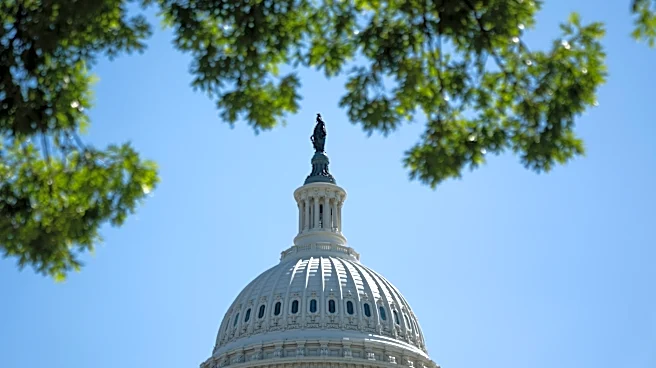
Congressman Donald Norcross has successfully advanced key provisions in the National Defense Authorization Act (NDAA) through the House Armed Services Committee. The NDAA includes significant measures aimed at enhancing military readiness and supporting
defense manufacturing. Notable elements of the bill include a pay raise for servicemembers, restoration of collective bargaining rights for Department of Defense employees, and substantial funding for military aircraft and technological advancements. Specifically, the bill allocates over $591 million for CH-47 helicopters and $3.8 million for MH-139A Grey Wolf helicopters, underscoring the importance of local manufacturing in South Jersey. These initiatives are designed to bolster national security and support the regional workforce involved in defense strategies.
Why It's Important?
The advancement of the NDAA with these provisions is crucial for several reasons. Firstly, it ensures that military personnel receive fair compensation and that their rights are protected, which is vital for maintaining morale and operational effectiveness. Secondly, the funding for defense projects supports technological advancements and readiness, which are essential for national security. Additionally, the focus on local manufacturing not only strengthens the defense sector but also provides economic benefits to regions like South Jersey, where these projects are based. This can lead to job creation and economic growth, benefiting both the local community and the broader U.S. economy.
What's Next?
As the NDAA progresses through the legislative process, it will likely face further scrutiny and potential amendments in both the House and Senate. Stakeholders, including defense contractors, labor unions, and local governments, will be closely monitoring the bill's progress. The focus will be on ensuring that the final version of the NDAA continues to support military readiness and workforce protections while balancing budgetary constraints. The outcome of this legislative process will have significant implications for defense policy and economic development in regions involved in defense manufacturing.